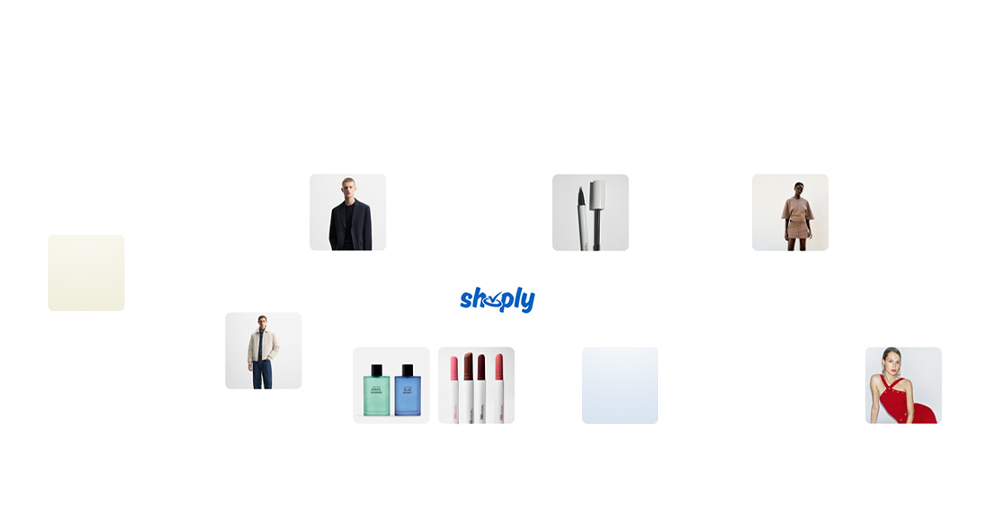
Shoply is a custom Shopify marketplace app built for social commerce at scale. It connects Shopify merchants to a built-in network of promoters and creators who drive sales in exchange for product-level commissions. The platform handles automatic Shopify product sync, real-time order attribution, commission payouts, and a mobile-first shopping experience designed around scroll-driven discovery and single-tap checkout. For merchants, it replaces the need to manage separate affiliate tools. For promoters, it offers a zero-inventory path to earning. For customers, it feels like one unified marketplace powered by products from independent Shopify stores.
Date:
Mar 2025 to July 2025
In Partnership with
Sharkbyte
Contributors
Nikhil Sharma, Architecture & Development
Meet Chaudhari, UI/UX Design













Traditional Shopify stores operate in isolation. Merchants run their own ads, manage their own traffic, and rely on disconnected third-party affiliate platforms that never sync cleanly with Shopify's product catalog or order system.
The result is fragmented. Promoters struggle with broken tracking links. Merchants lose visibility into which affiliates drive real revenue. Customers land on inconsistent storefronts with no discovery layer to surface products they actually want.
There was no single platform that combined Shopify product sync, a marketplace storefront, and a native affiliate commission engine in one connected system.
The challenge was building that system from scratch. A custom Shopify app that feels like a marketplace to customers, an affiliate network to promoters, and a growth channel to merchants, all running on one shared infrastructure with real-time data flowing between every layer.
To solve this, we developed Shoply as a full-stack custom Shopify marketplace application with three connected layers: a merchant integration layer powered by the Shopify API, a promoter network with built-in commission logic, and a consumer-facing marketplace.
Shopify Product Sync: Merchants connect their Shopify store once. Products, variants, inventory, and pricing sync automatically and stay updated through Shopify webhooks.
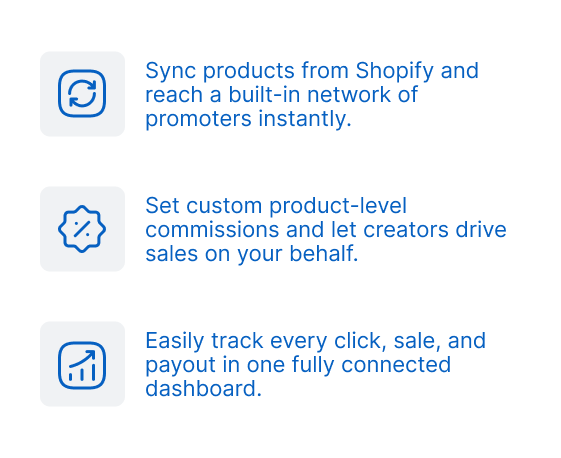
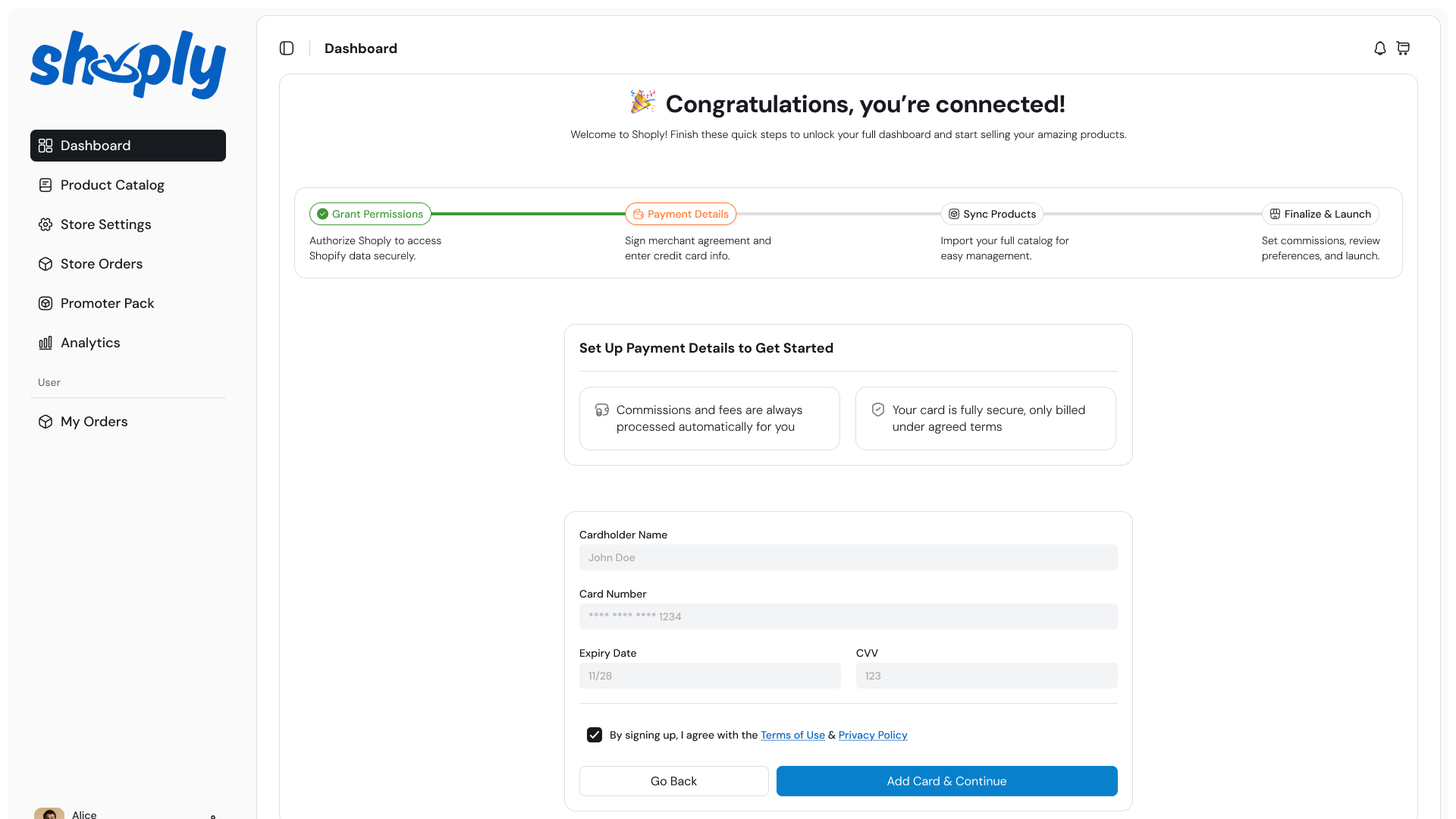
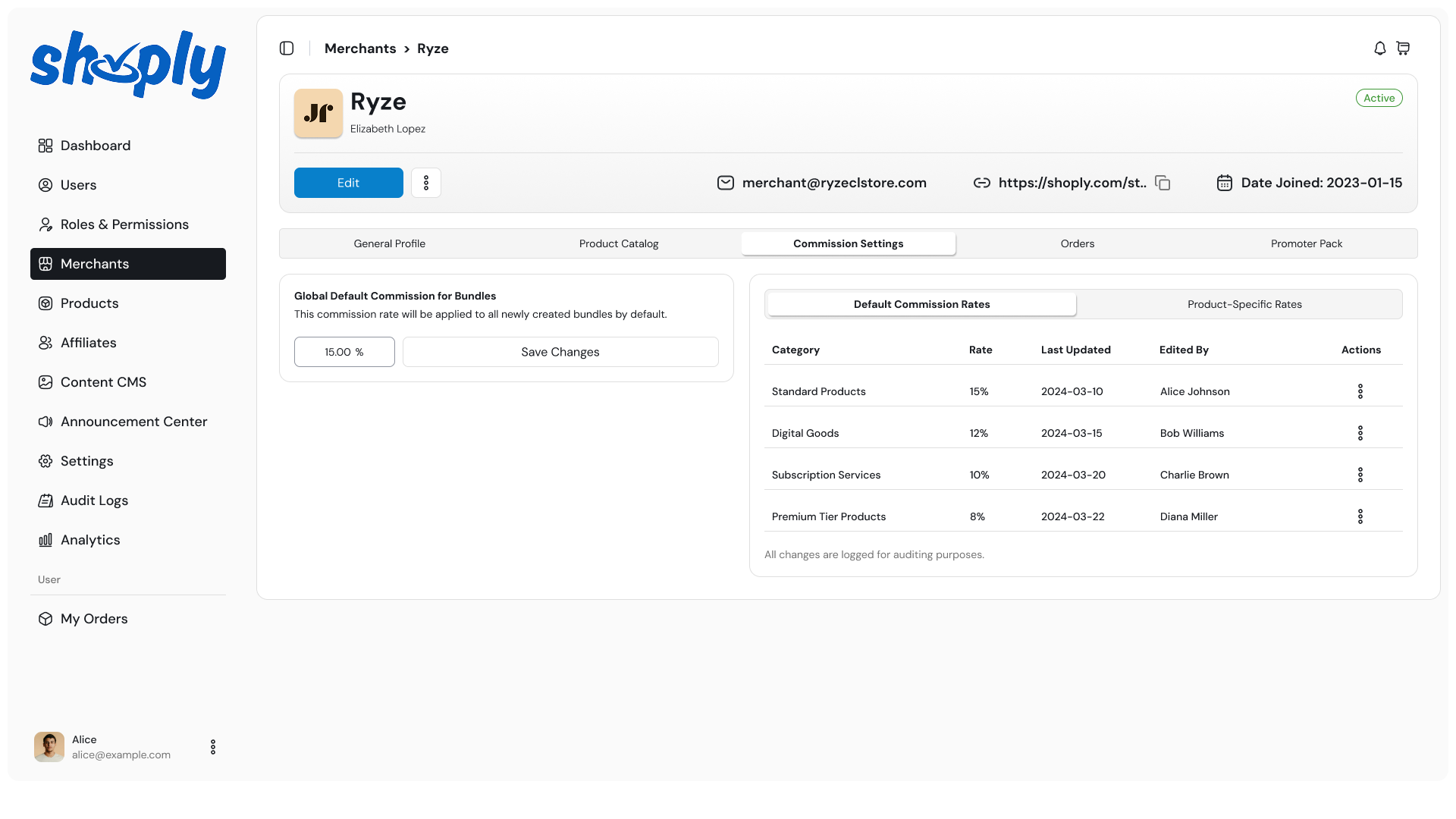
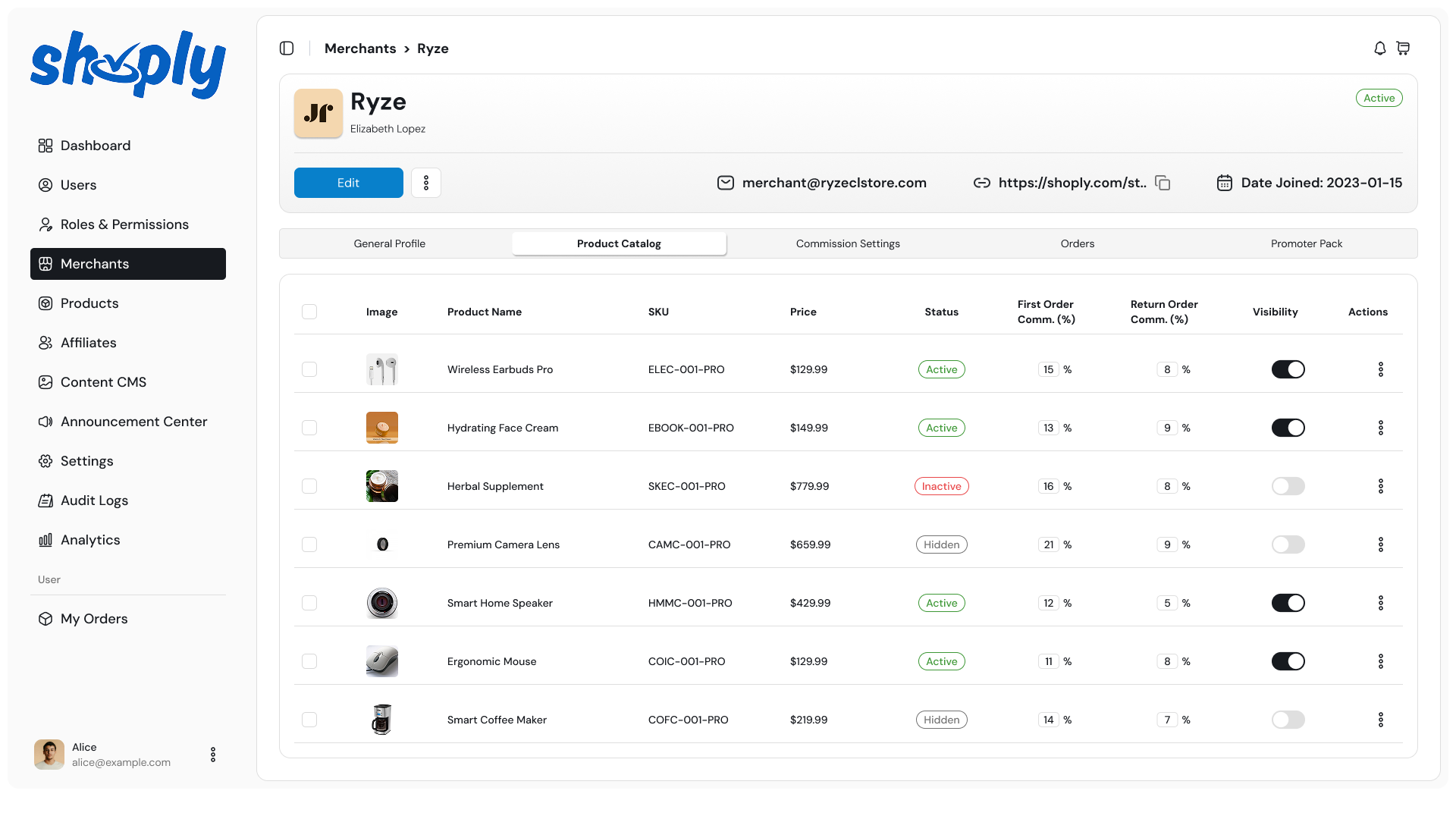
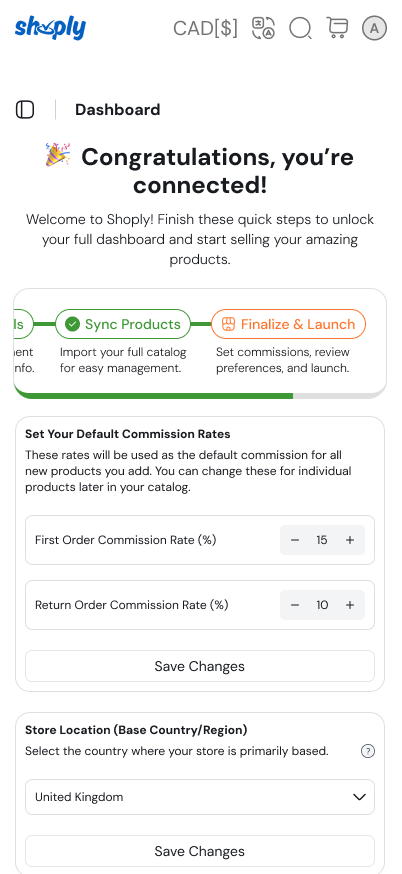
Product-Level Commission Engine: Merchants set custom commission rates per product for first-order and returning-customer sales. Promoters browse, generate tracked links, and earn automatically.
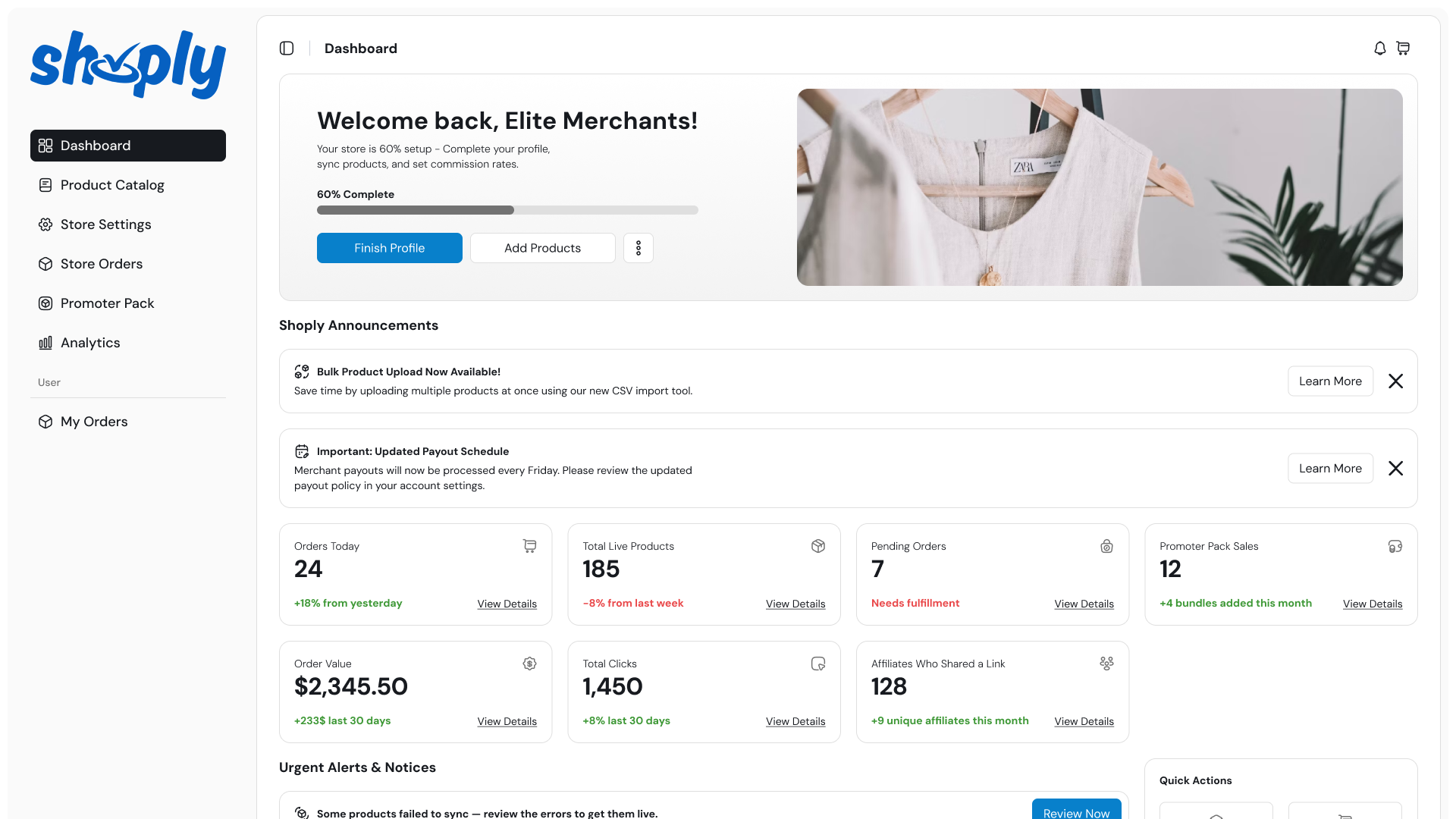
Connected Analytics Dashboard: Every click, sale, and payout is tracked in one fully connected dashboard, giving merchants complete visibility into affiliate performance and revenue attribution.
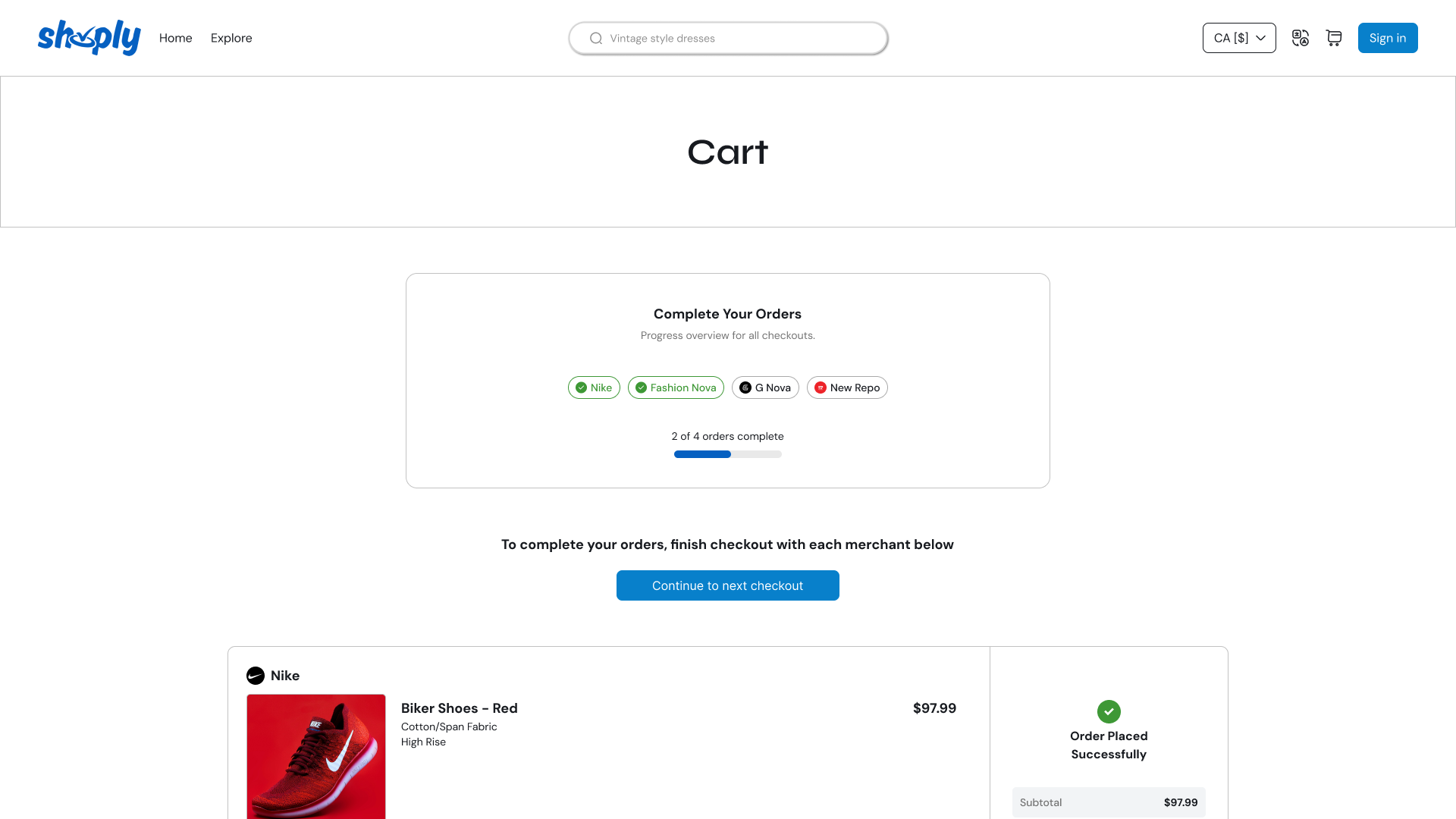
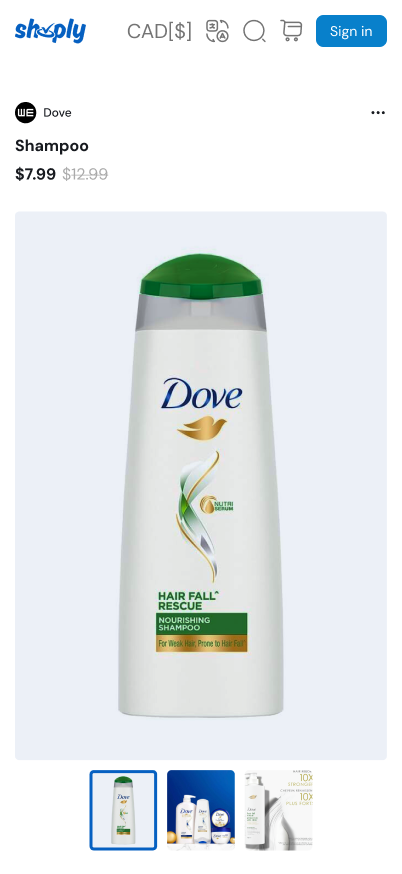
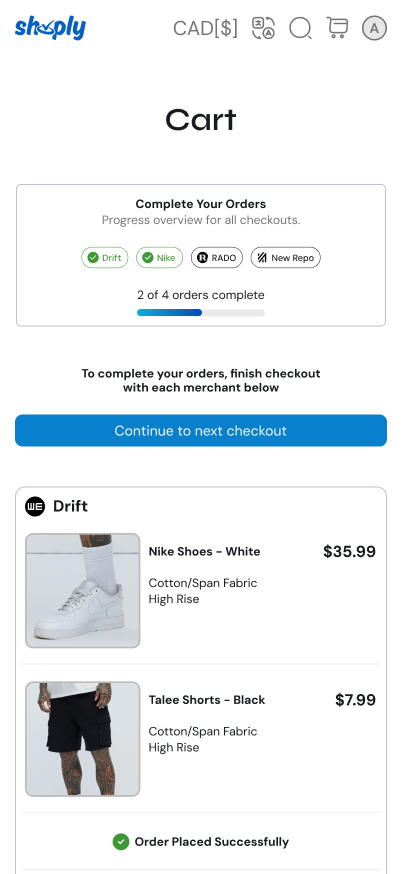
The customer-facing side was designed as a discovery-first shopping platform. Interest-based onboarding personalizes the feed from the first session. Infinite scroll surfaces trending and relevant products. Sticky CTAs and a single-screen checkout reduce friction at every step, keeping the path from discovery to purchase under three taps.
Shoply also reduces transaction friction by optimizing every milestone of the user journey. The checkout pathway eliminates unnecessary form fields and cognitive overload. Transparent pricing, social-commerce layouts, and structural clarity give boutique Shopify brands a premium stage to showcase products while offering customers a fast, secure buying experience.
Shoply's architecture is built for the demands of a multi-merchant Shopify marketplace handling high-volume product sync, real-time affiliate tracking, and concurrent transactional processing.
The front end runs on Next.js with server-side rendering, delivering optimized page loads, dynamic layouts, and strong baseline SEO for every product and category page. The back end uses Laravel with a modular API layer, connecting to the Shopify API for product and order data, processing commission calculations, and managing secure user authentication across merchant, promoter, and customer roles.
MySQL handles relational data. Redis manages queue processing for Shopify webhook events and high-frequency click tracking. Stripe powers the payment and payout layer. The entire system communicates through a RESTful API that decouples the storefront from the transactional engine, allowing each layer to scale independently.

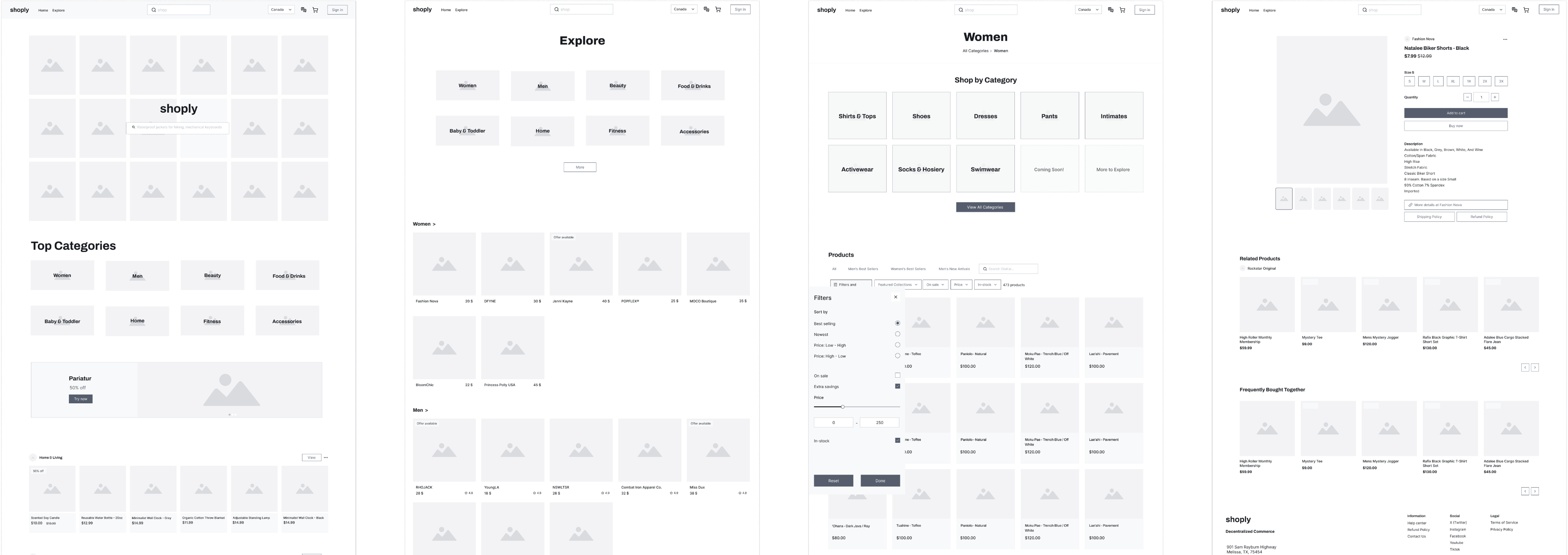
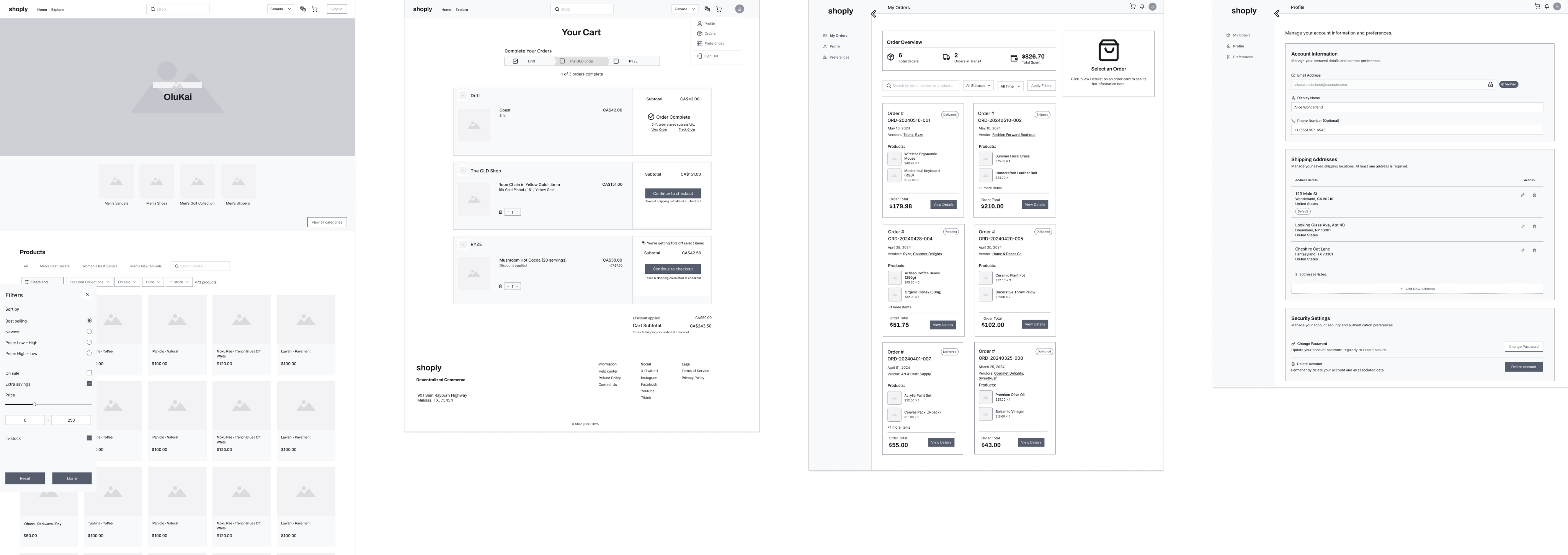
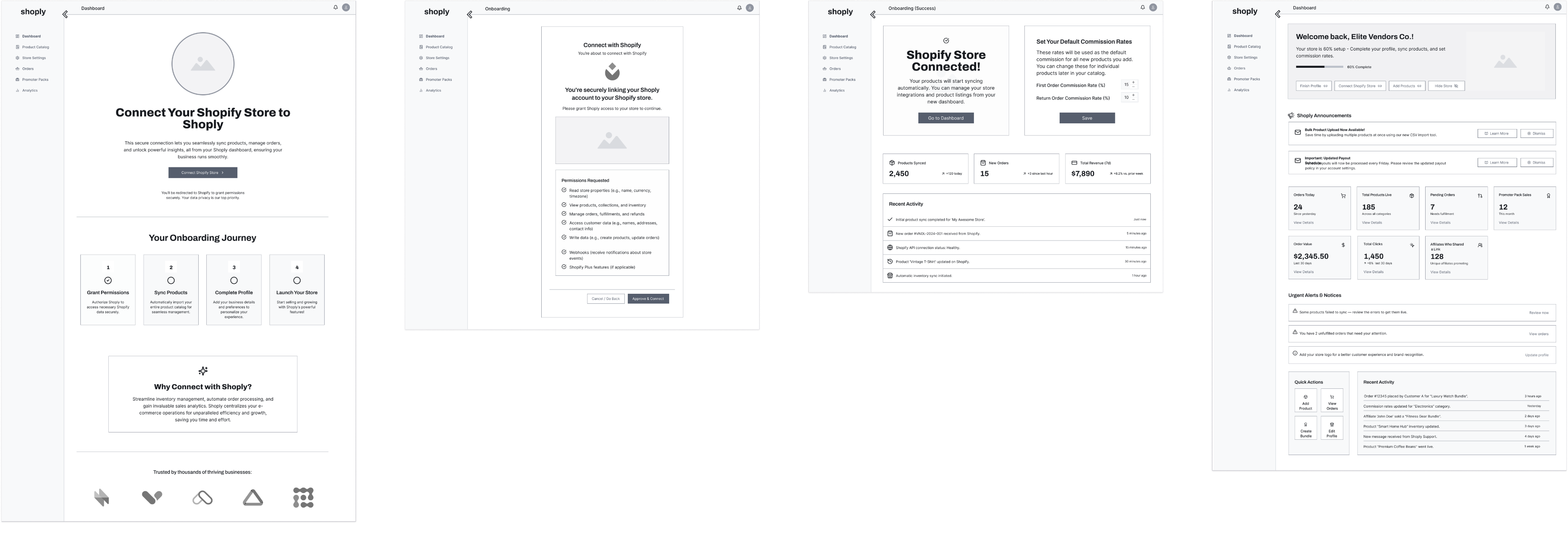
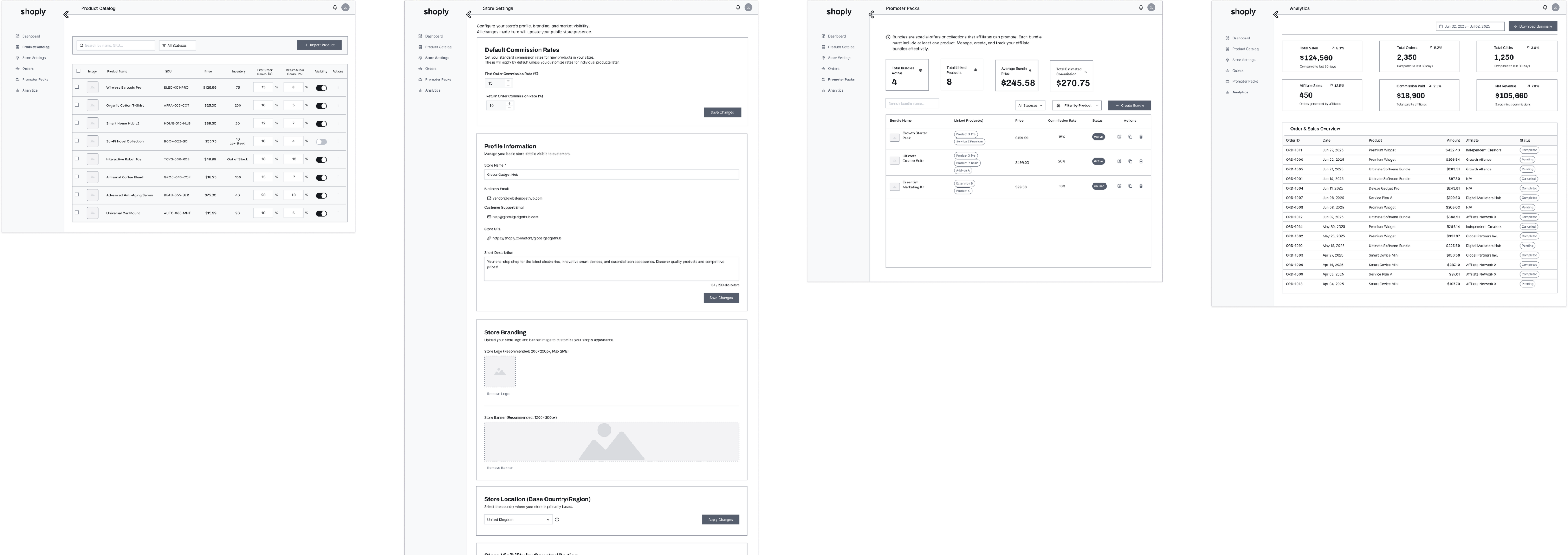
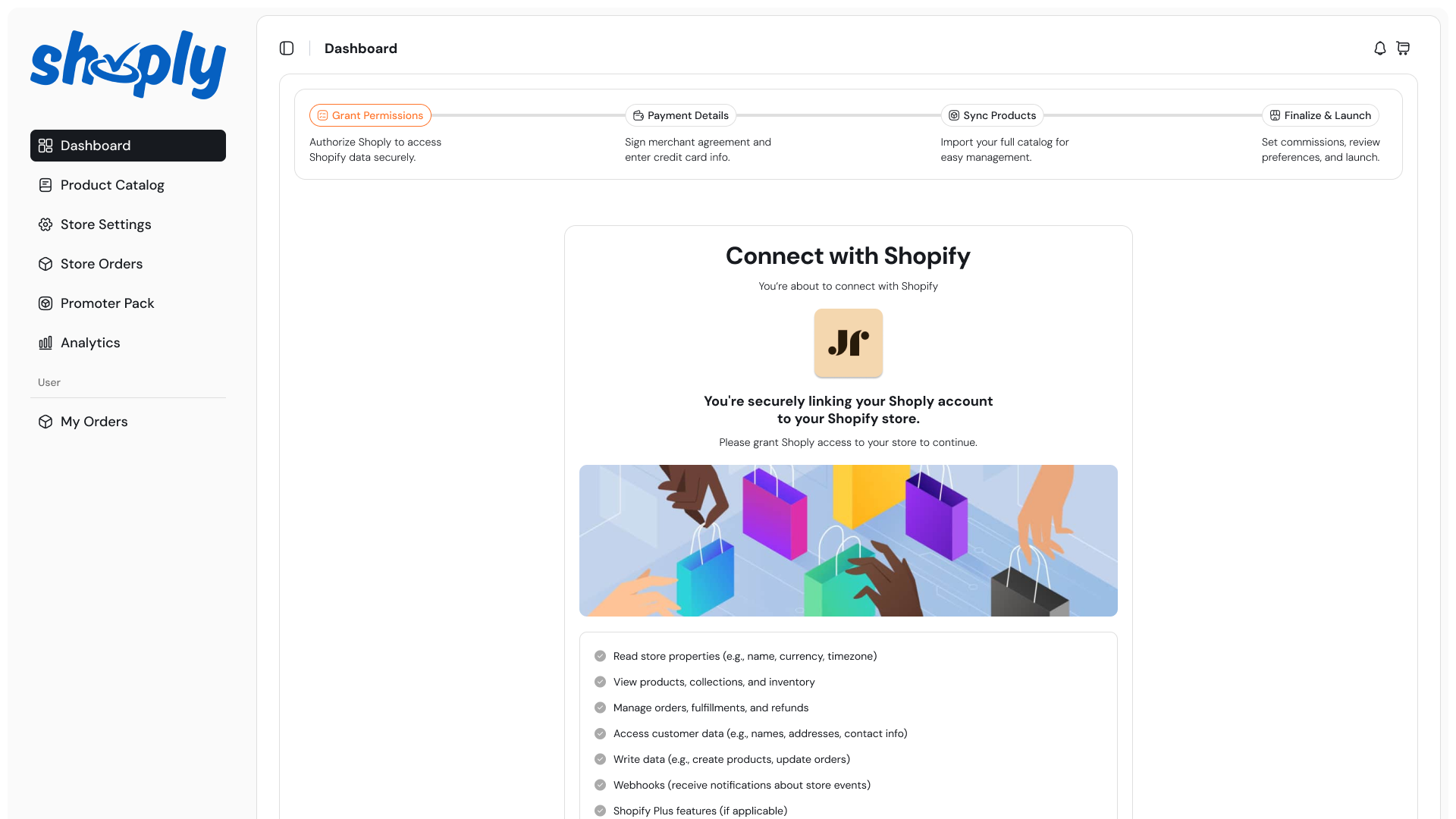
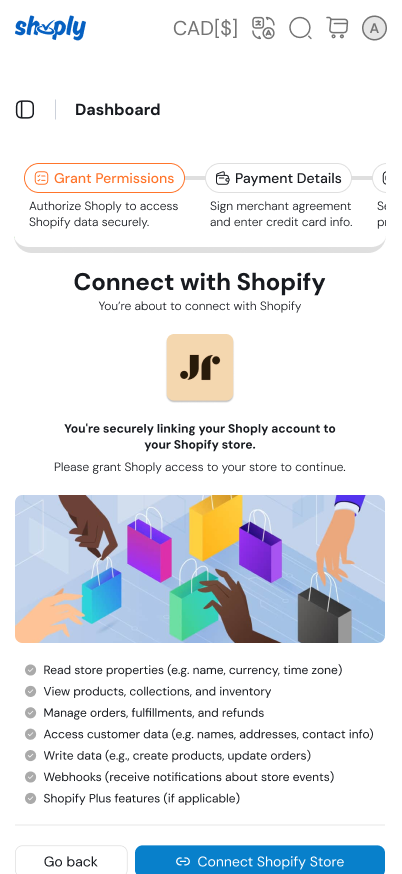
Shoply's wireframing phase started with the Shopify merchant onboarding flow and worked outward. We mapped the full OAuth permissions handshake, product sync confirmation states, and commission setup sequence before touching the consumer side. This meant every merchant screen had a defined purpose and data dependency before a single pixel was styled.
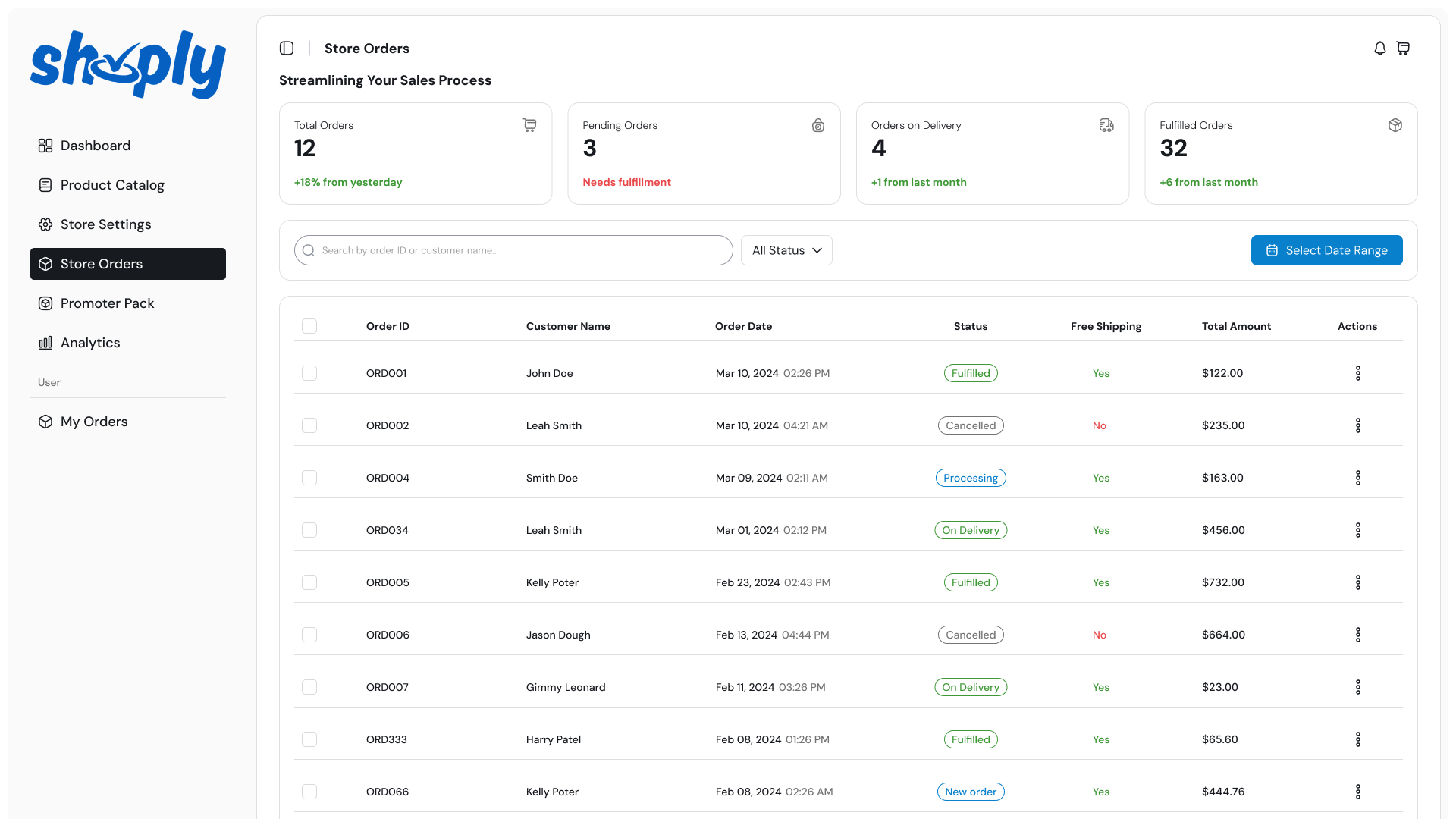
On the customer-facing side, wireframes followed a mobile-first scroll architecture. A minimal landing screen introduces the platform and drives sign-up. From there, interest selectors feed into a personalized discovery loop built around vertical product cards, thumb-accessible navigation, and single-tap actions. Administrative views for merchants were structured around clean data hierarchy, surfacing product performance, Shopify sync status, and order fulfillment without burying critical actions behind extra taps.
By locking spatial structure across all three user types early, we avoided the common marketplace problem of designing a beautiful storefront that breaks the moment a merchant tries to manage 500 synced Shopify products on a phone.
A complete design system was built before any interface styling began. For a custom Shopify marketplace app handling three distinct user roles, this was non-negotiable.
The system defines layout grids, typographic hierarchy, icon sets, color tokens, component states, and spacing rules, all calibrated for mobile-first thumb zones. Every button, card, table row, and navigation element shares the same structural logic so the merchant dashboard, the admin CMS, and the customer storefront all feel like one product.
This centralized framework accelerated UI development across dozens of screens, eliminated visual inconsistency between user types, and ensures the interface holds together as the product catalog and merchant network scale.
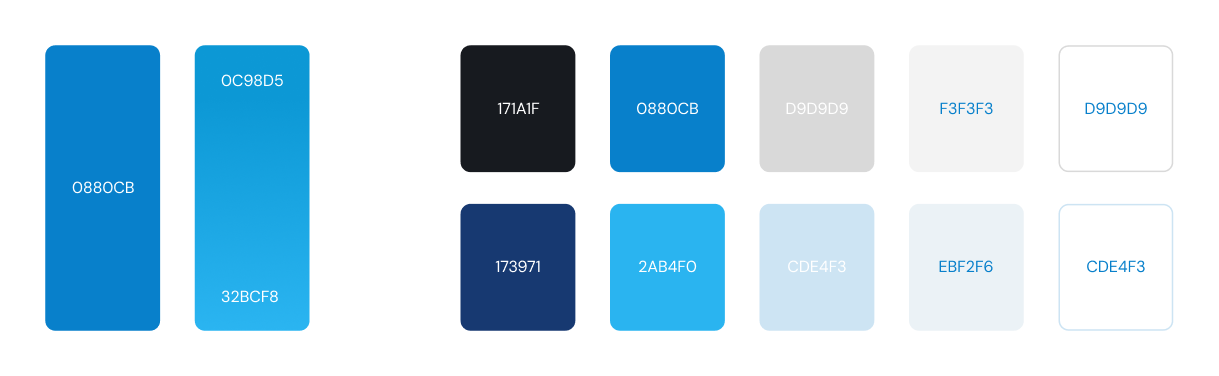
Colors
When developing the color palette for Shoply, we aimed to implement an ultra-clean, minimal backdrop that lets premium product photography take center stage as the hero. The palette centers on neutral tones, clean whites, and deep modern charcoal, contrasted by soft gradients and premium visual accents that draw attention to active calls-to-action. We validated these combinations across multiple mockups to guarantee excellent visibility and a sleek lifestyle aesthetic. This balanced color architecture achieves high aesthetic trust and a youthful tone without inducing any visual fatigue.
Font
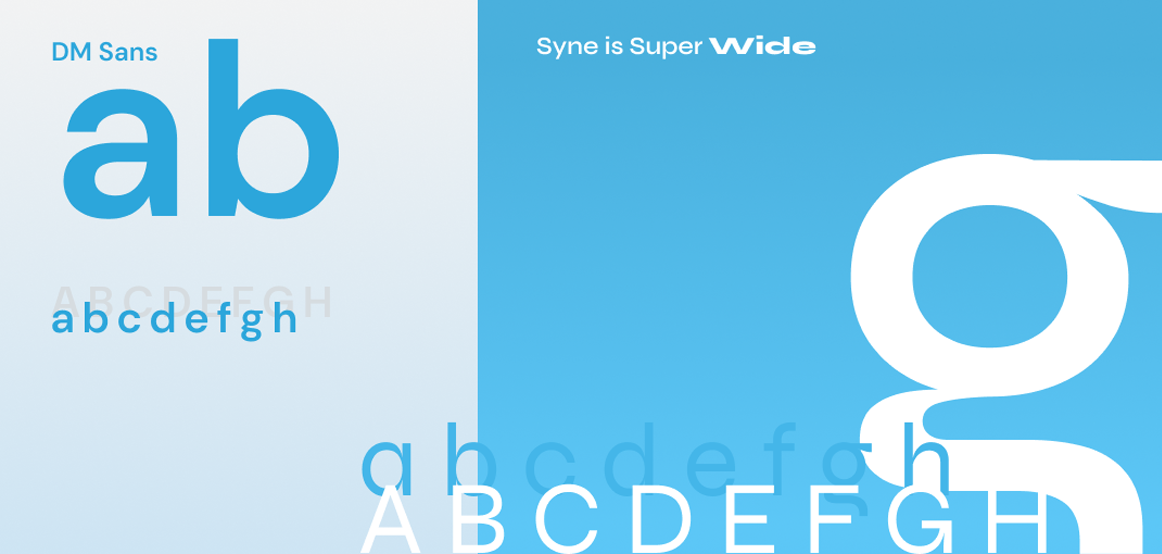
A modern sans-serif typeface family was selected as the typography choice for Shoply due to its excellent legibility on mobile screens and sleek editorial hierarchy. The typeface offers an expansive variety of weights, allowing us to compose bold, high-impact product headers alongside clean, easily scannable descriptions. Its generous kerning and open architecture align flawlessly with our minimal aesthetic, ensuring product information is quickly digestible during fast scrolling.
Buttons and Icons
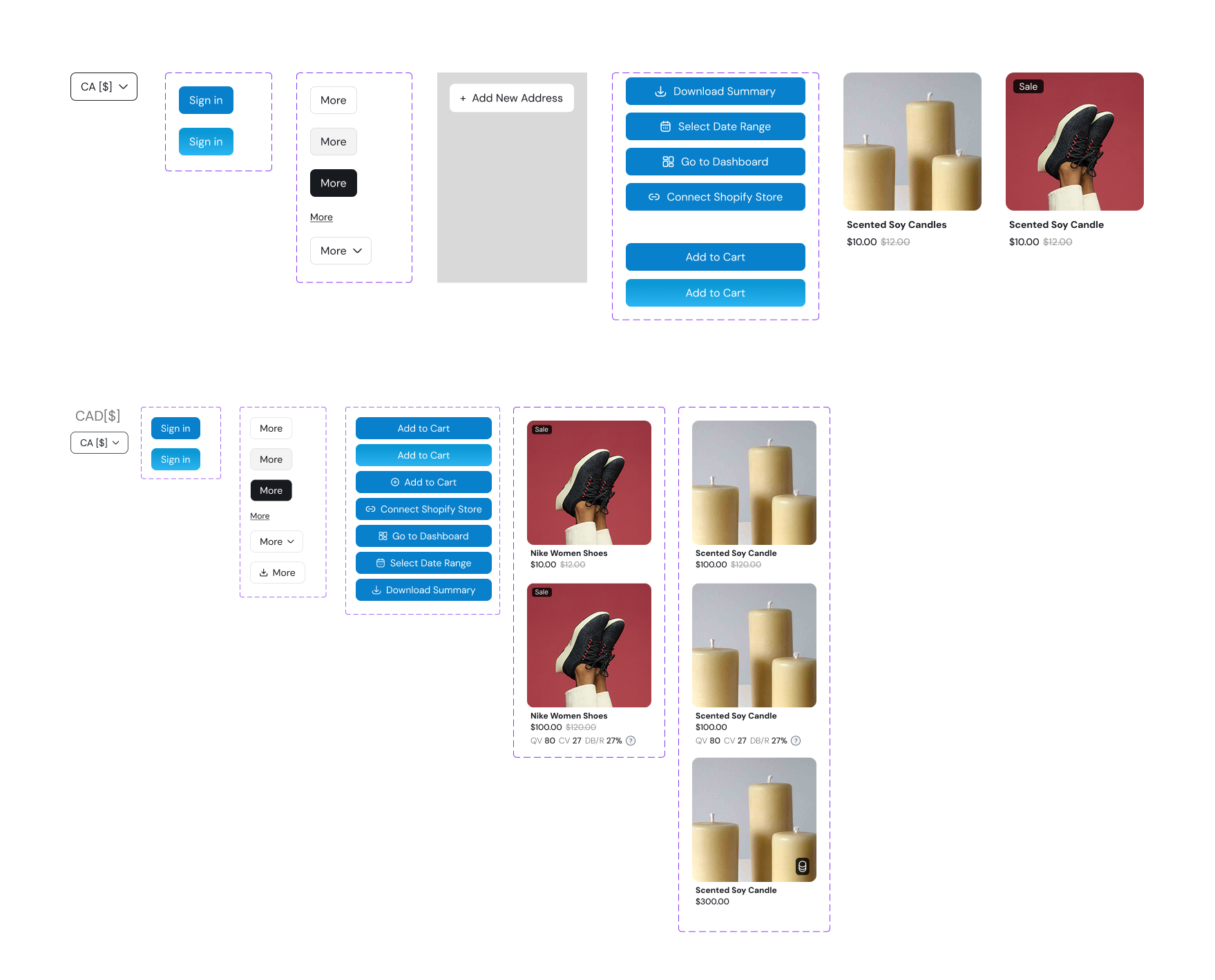
In Shoply, having interactive components and iconography properly balanced within our design system is vital for establishing an intuitive visual language and reducing cognitive friction. Primary and secondary buttons utilize distinct border radiuses, soft drop-shadows, and clear state transitions (such as tap scales and active fills) to offer immediate confirmation to the user. Meanwhile, our lightweight icon kit guides thumb interactions along the bottom navigation and detail panels without adding unnecessary text clutter. This ensures every single micro-interaction speaks the same unified language of effortless commerce.
Landing Page
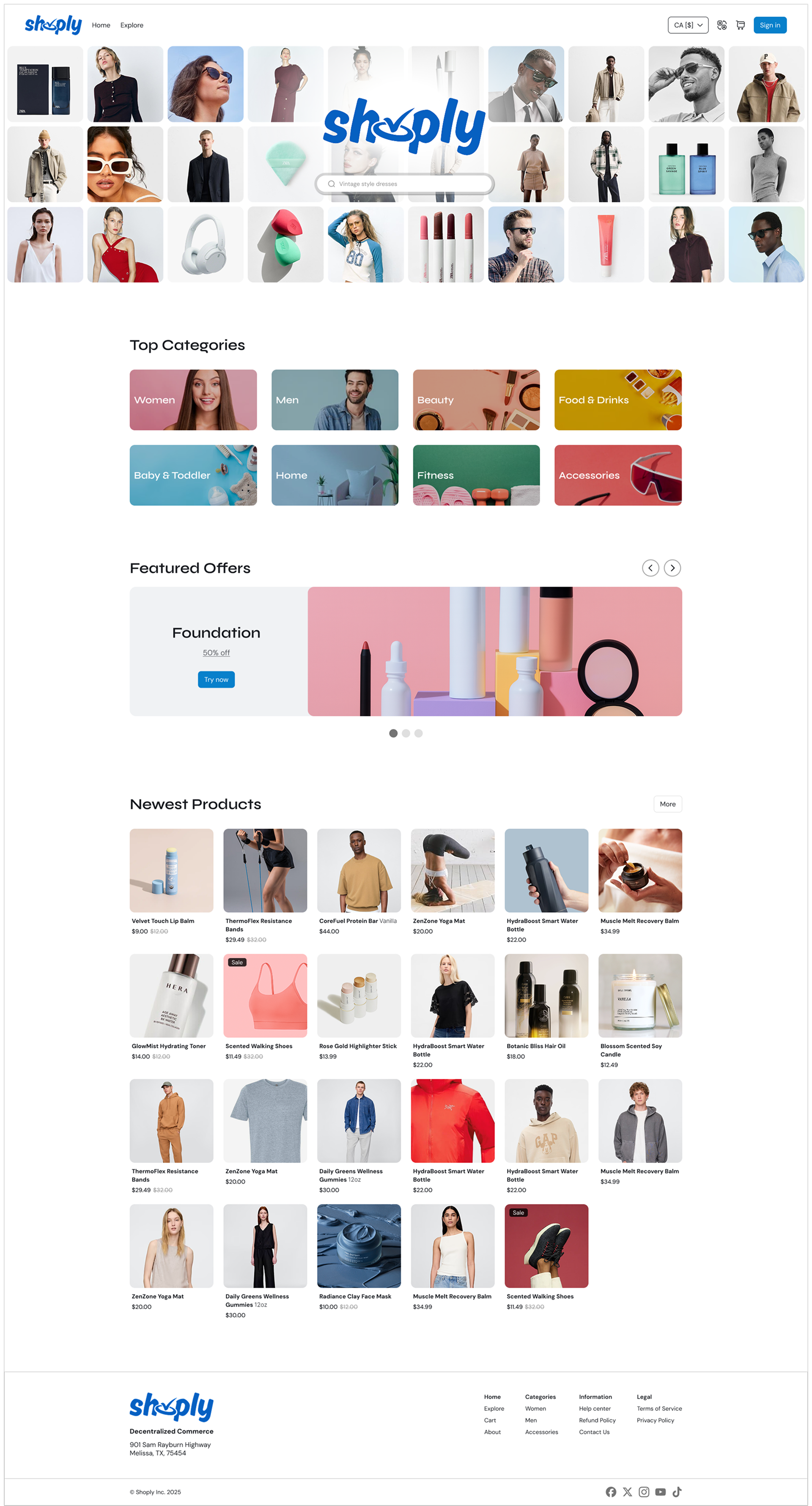
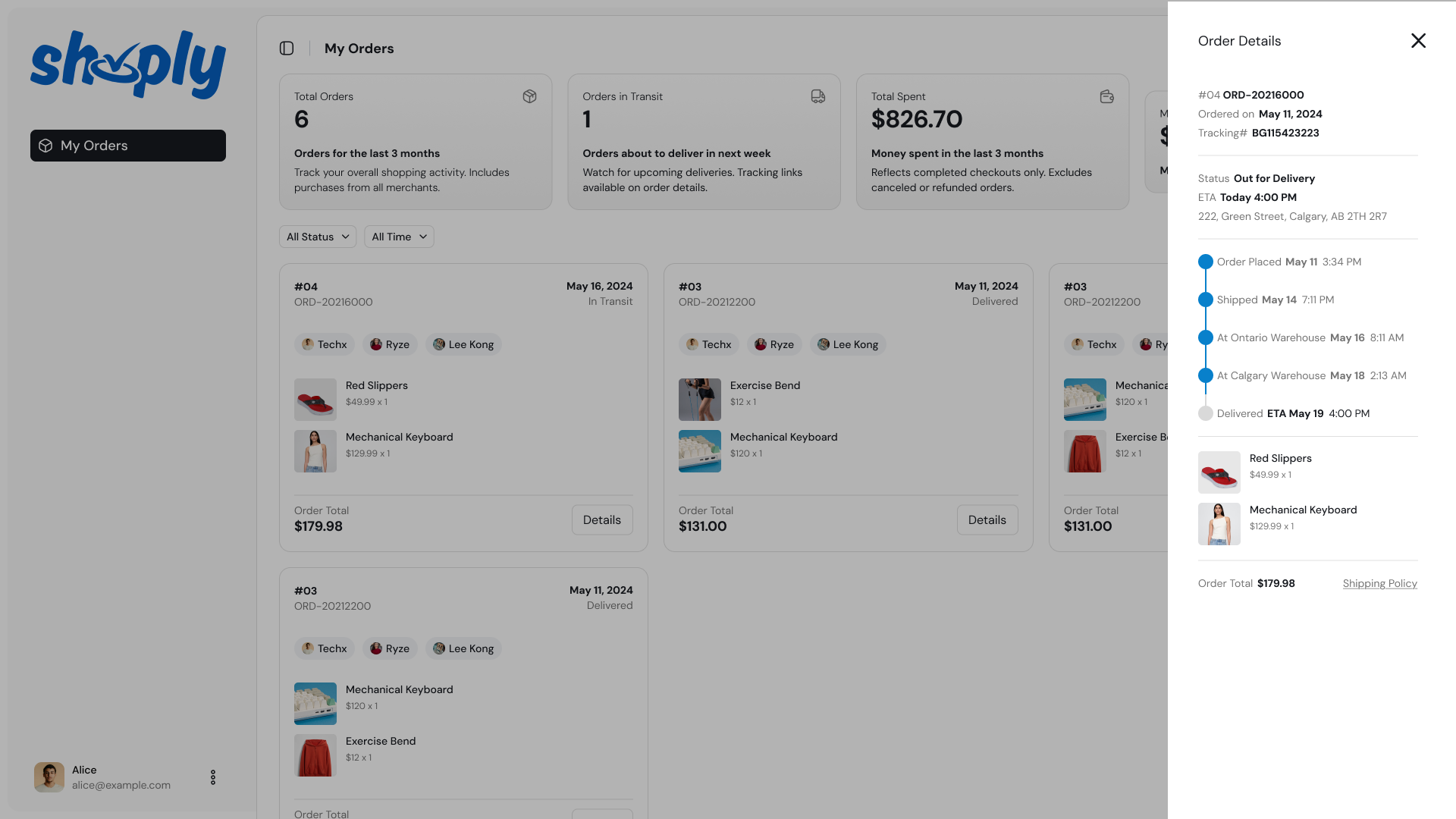
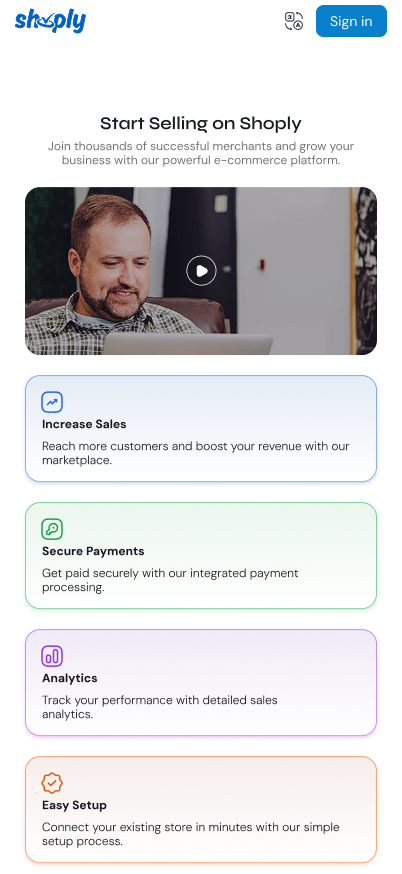
Shoply's web landing page serves one job: convert visitors into merchants or shoppers.
The hero fold leads with bold lifestyle typography and a curated product showcase that communicates the marketplace experience immediately. Download links and account access sit above the fold. Below, the page walks through the value proposition for each user type: merchants see Shopify sync and commission controls, promoters see earning potential, and customers see discovery and checkout speed.
No feature tour. No scrolling wall of text. The page is structured to answer "what is this" and "why should I care" within three seconds, then hand off to the sign-up flow.
Screens
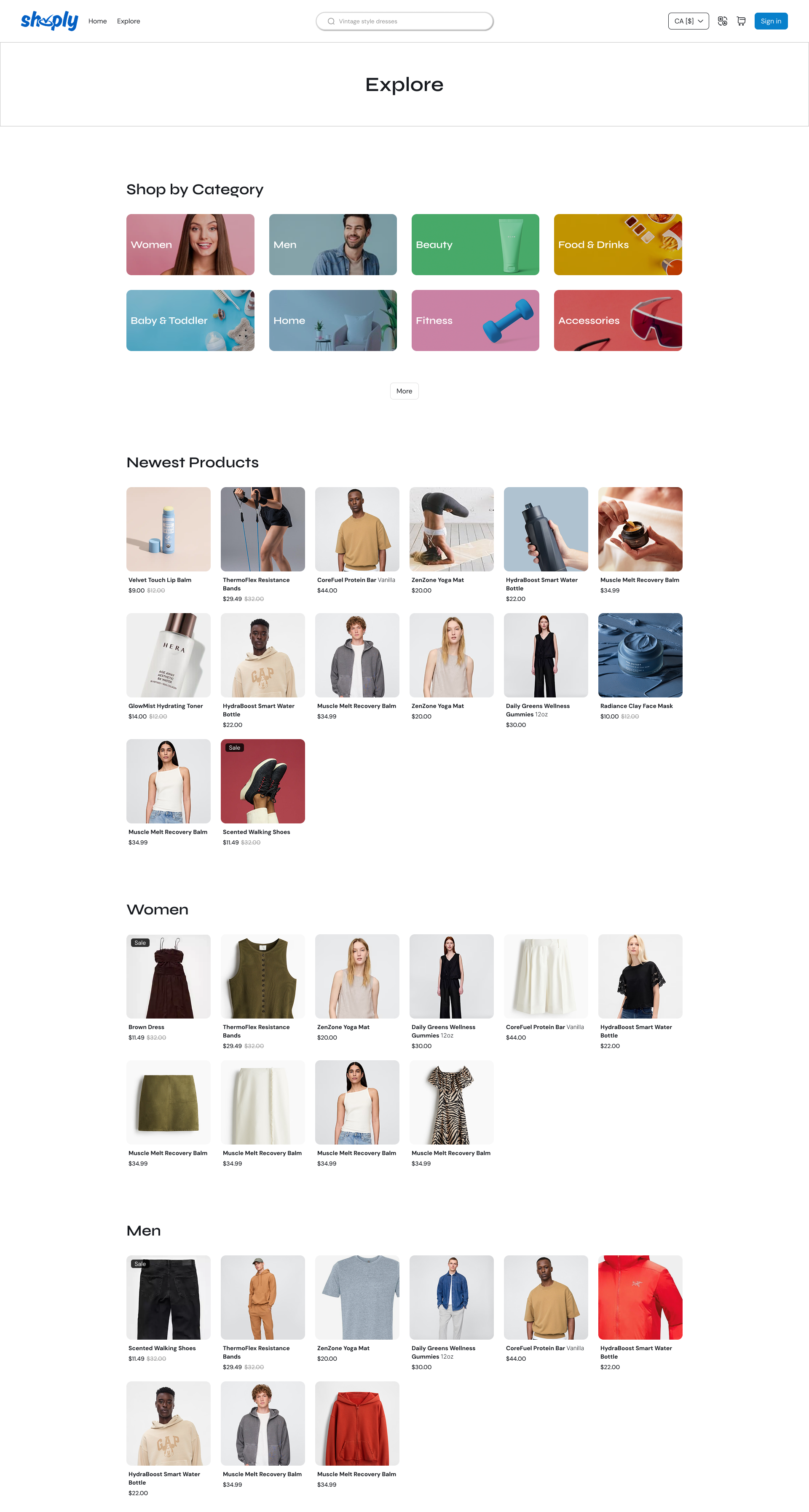
Shoply's user interface screens are meticulously structured to feel visual-first, responsive, and natural for single-handed mobile navigation. This structural balance ensures users can scan products, modify parameters, and complete transactions without facing overwhelming text blocks or old-school marketplace layouts. Micro-interactions and smooth transitions enhance the scrolling loop, gently guiding consumers through their personalized fashion and lifestyle feeds.
User Screens
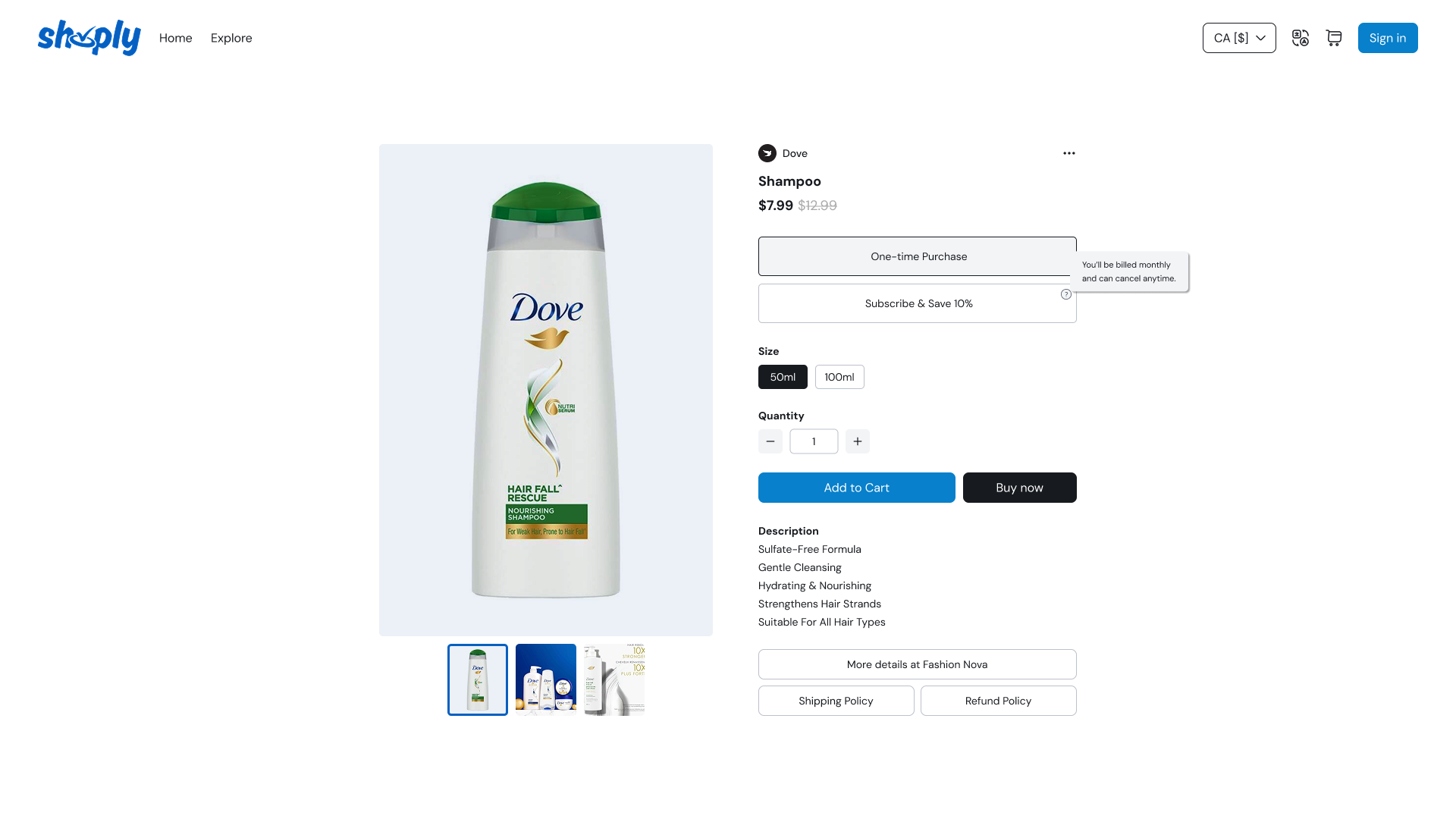
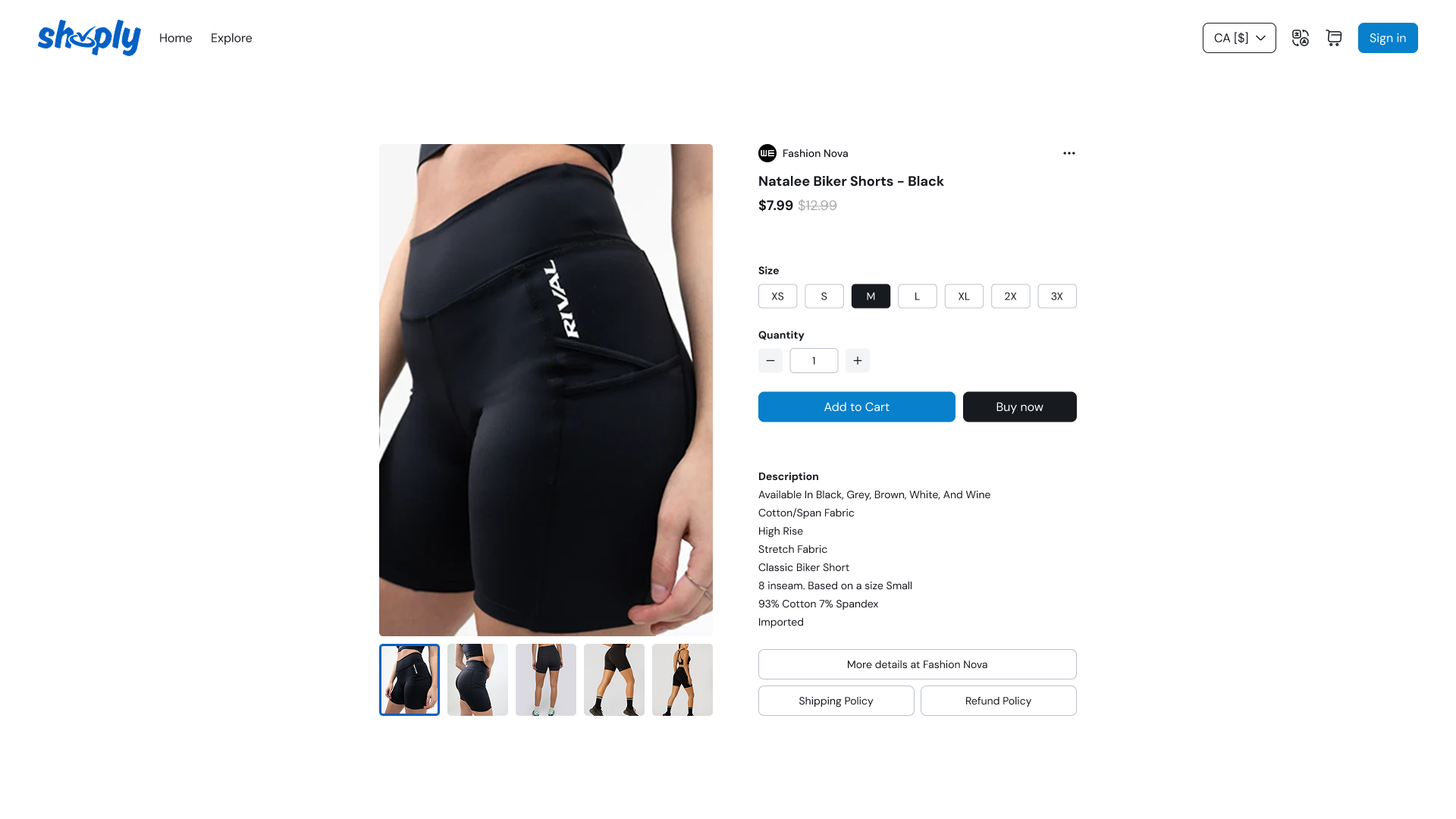
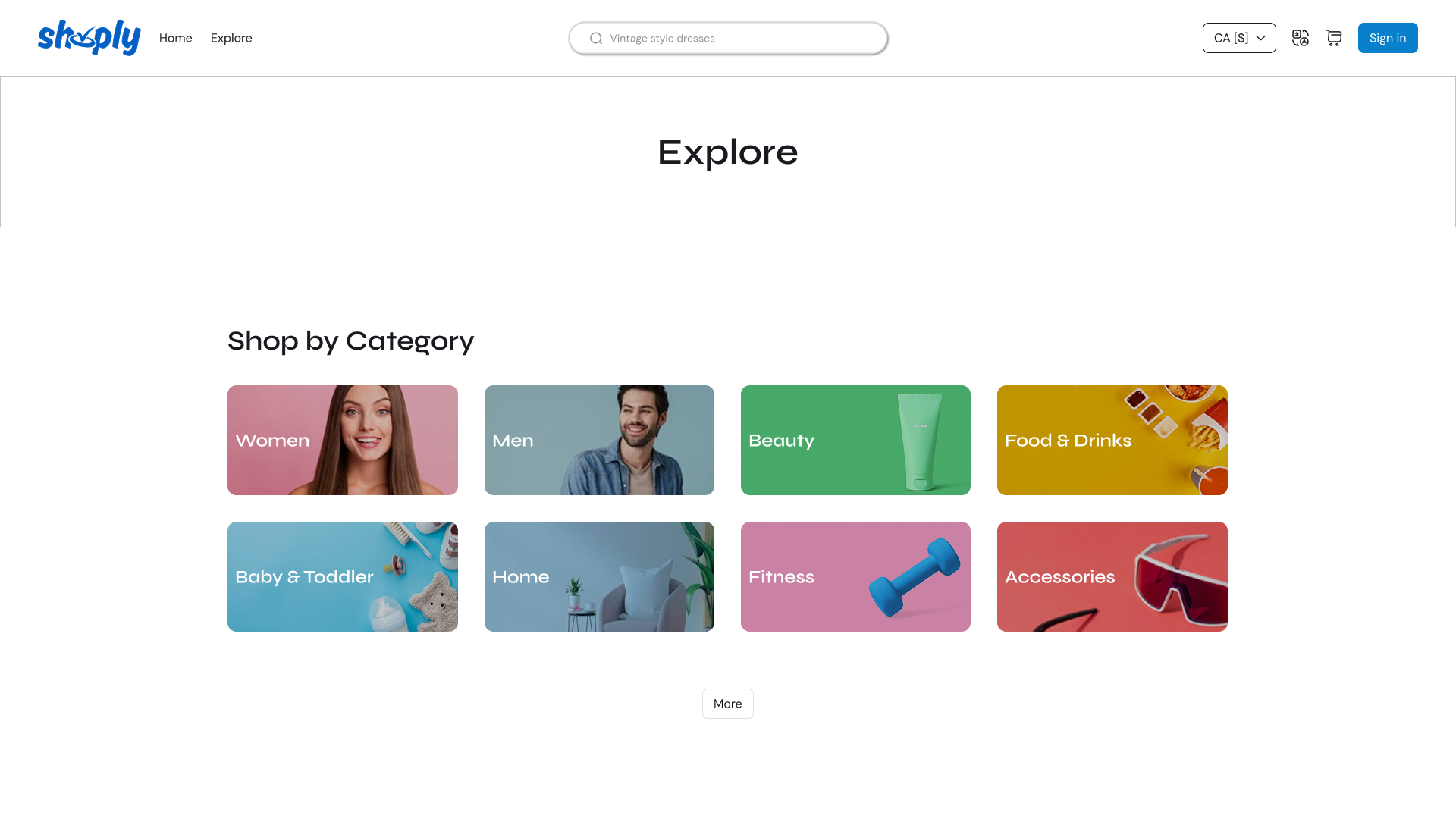
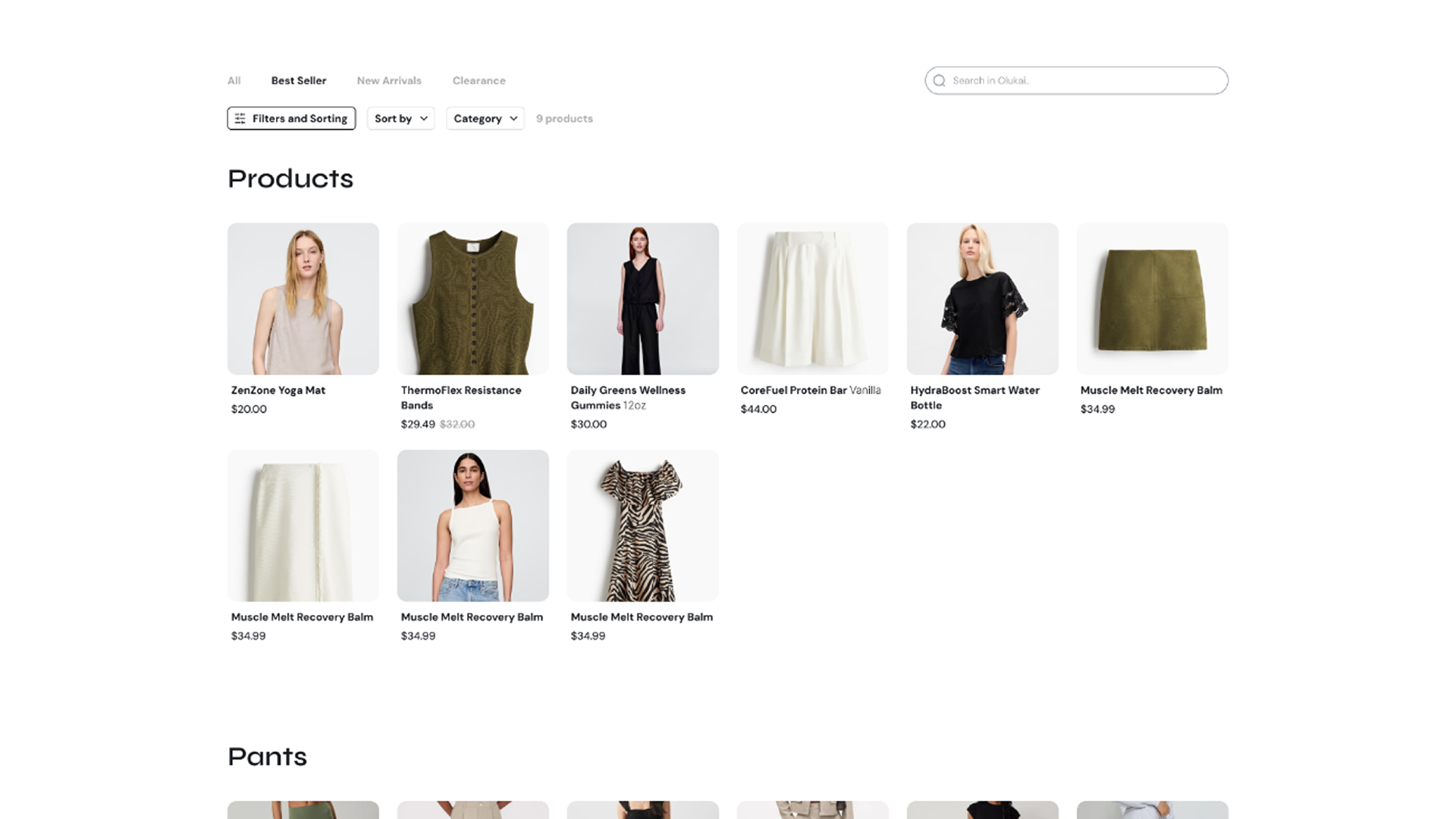
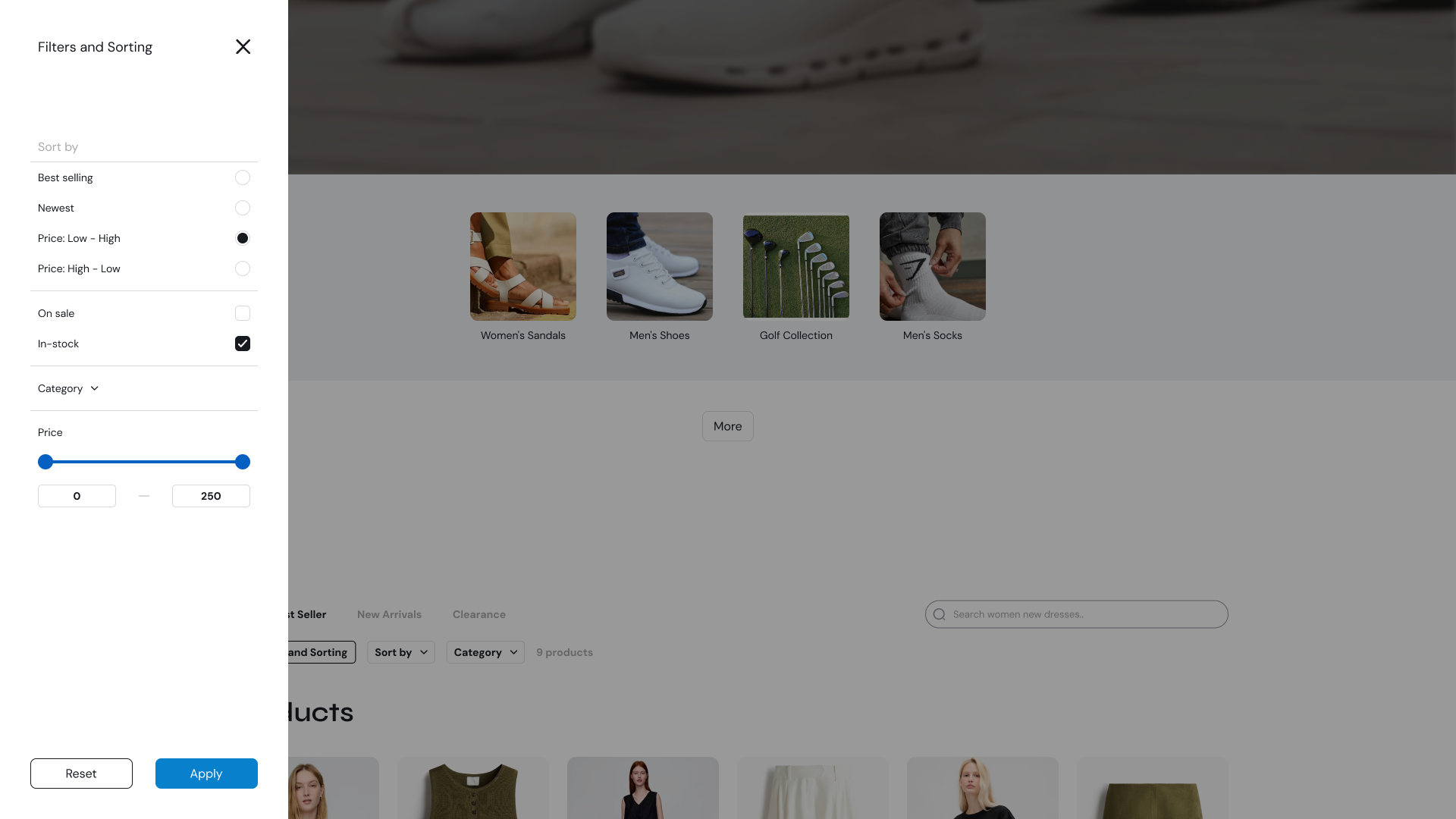
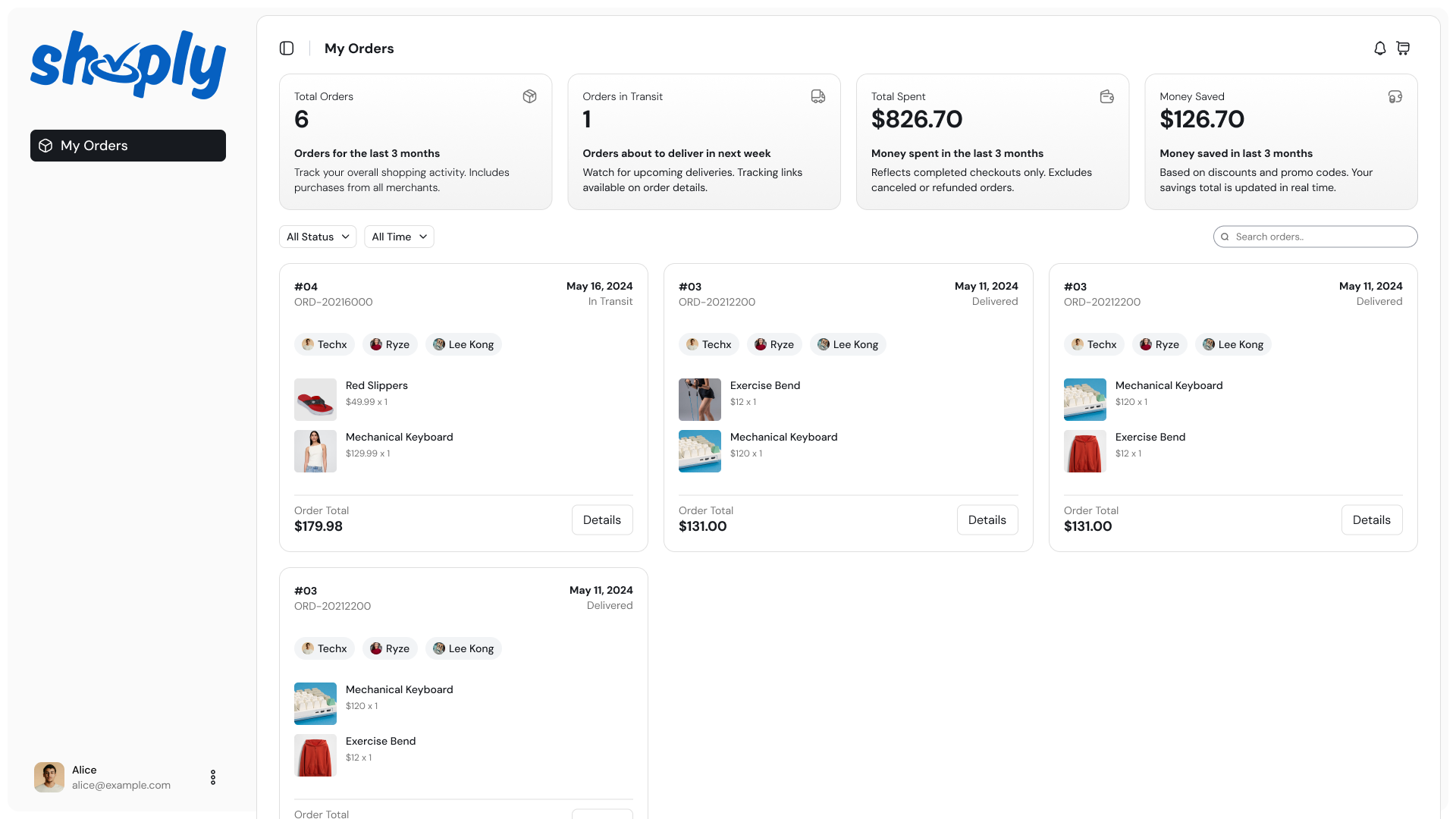
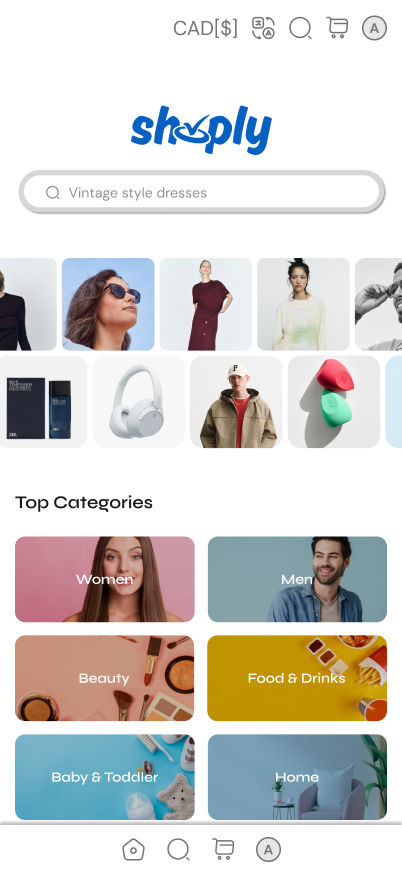
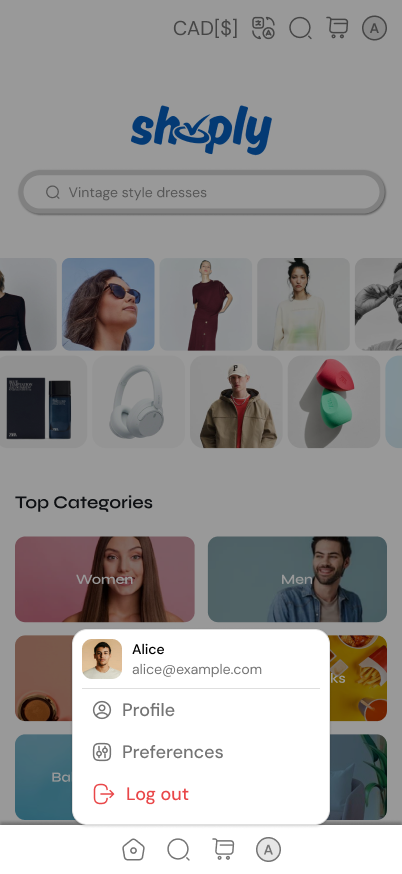
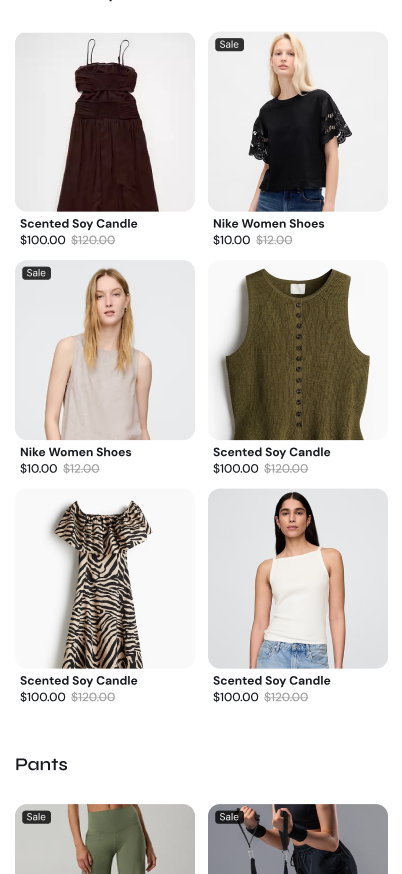
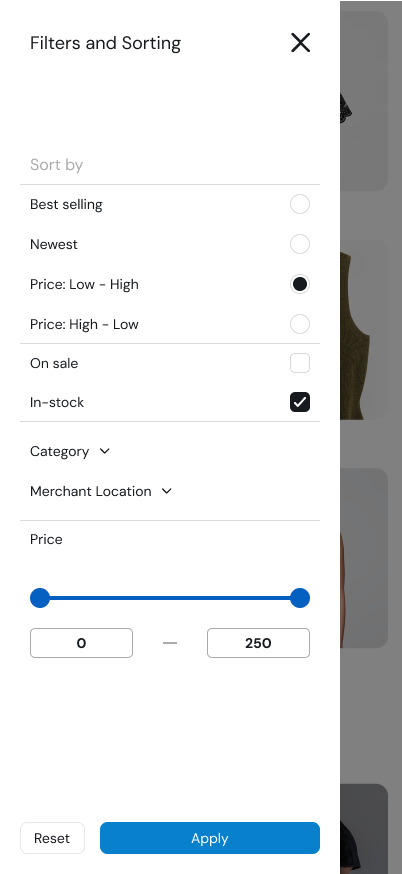
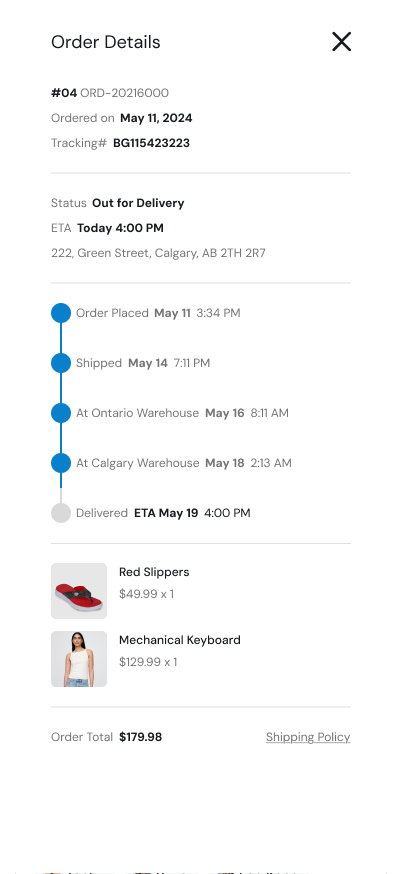
The user-facing ecosystem covers the entire mobile loop—from interest selector cards and infinite discovery scrolling to the sticky call-to-actions on product pages and the single-page checkout sequence.

Merchant UI Screens
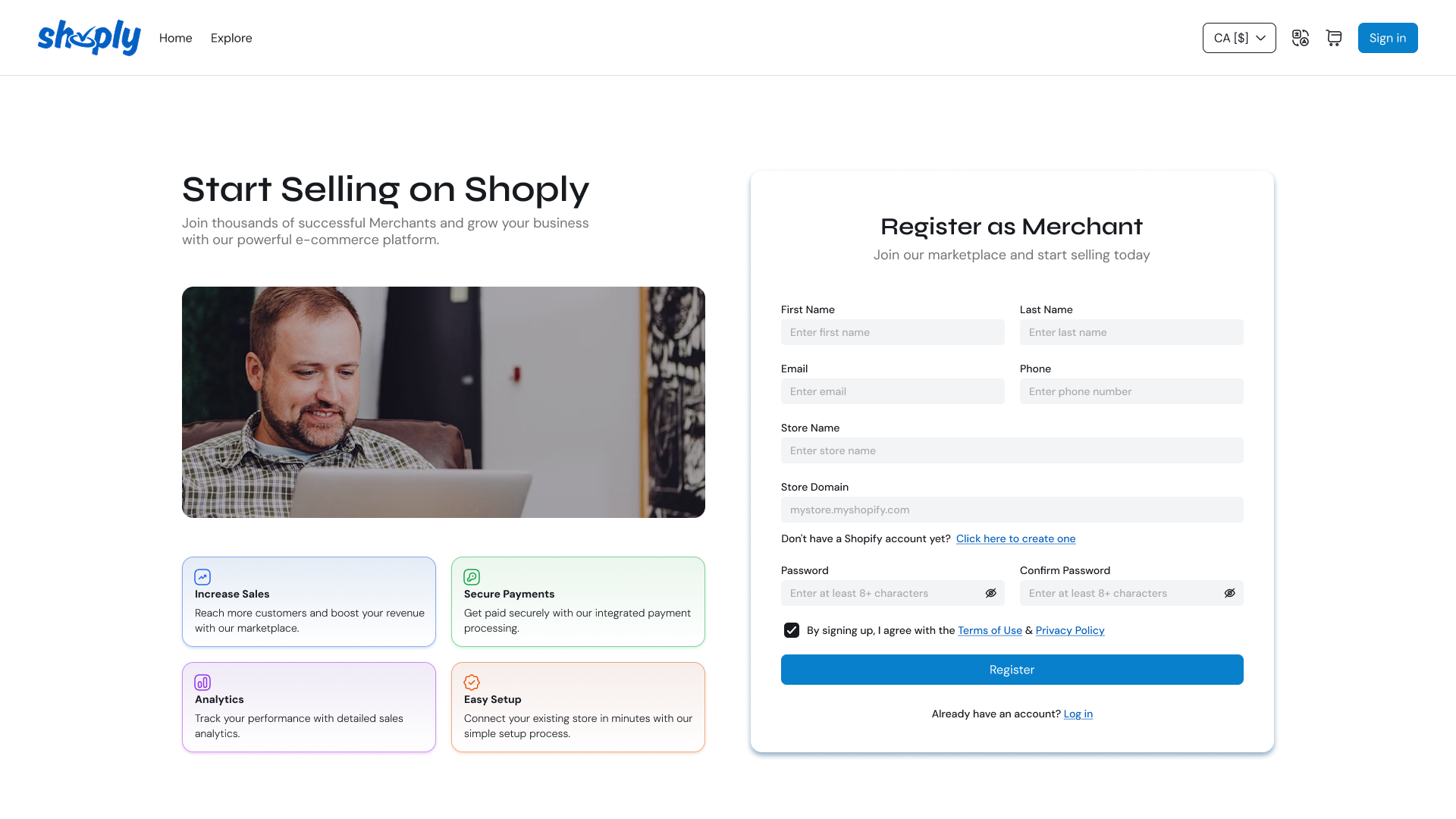
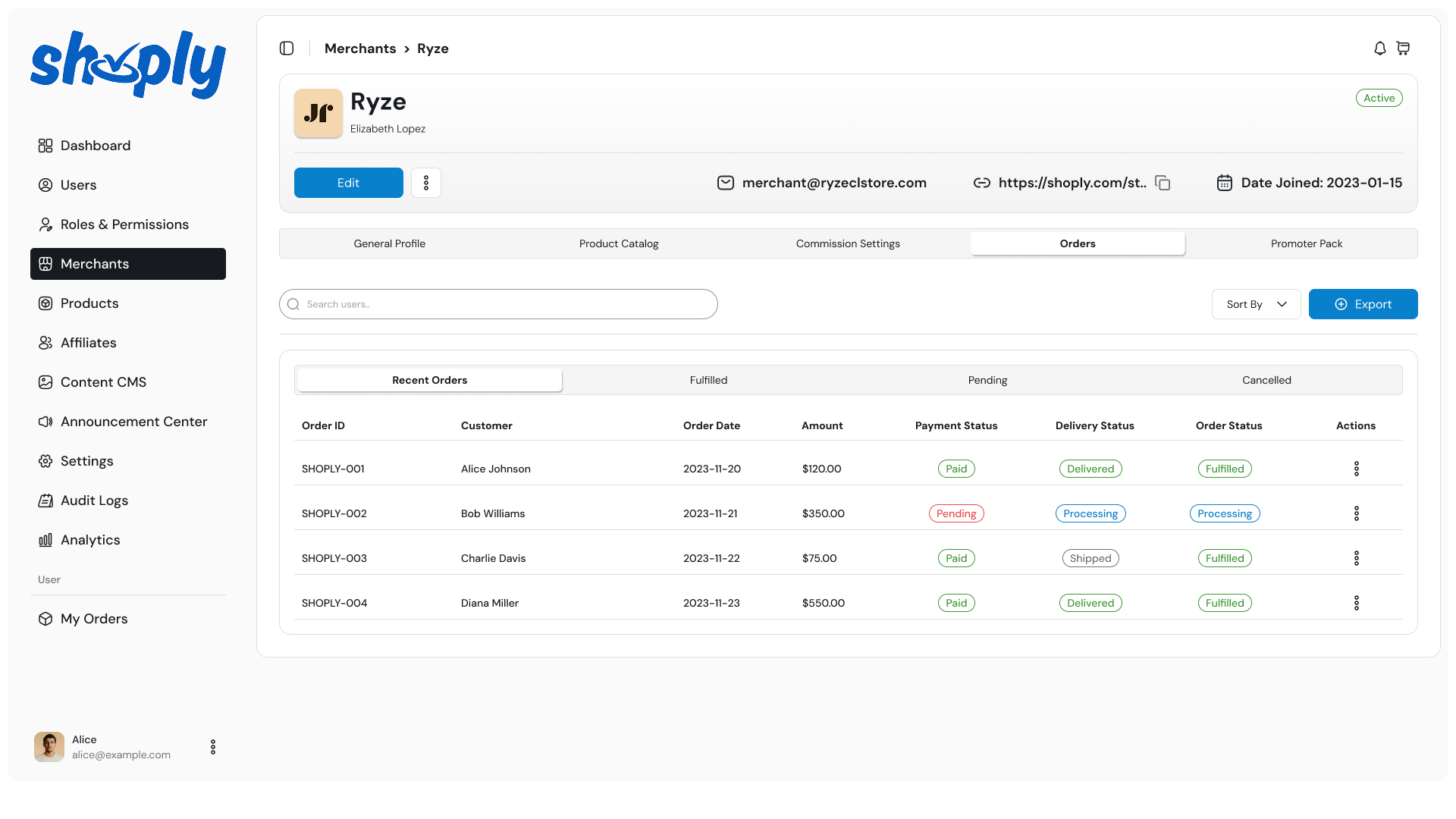
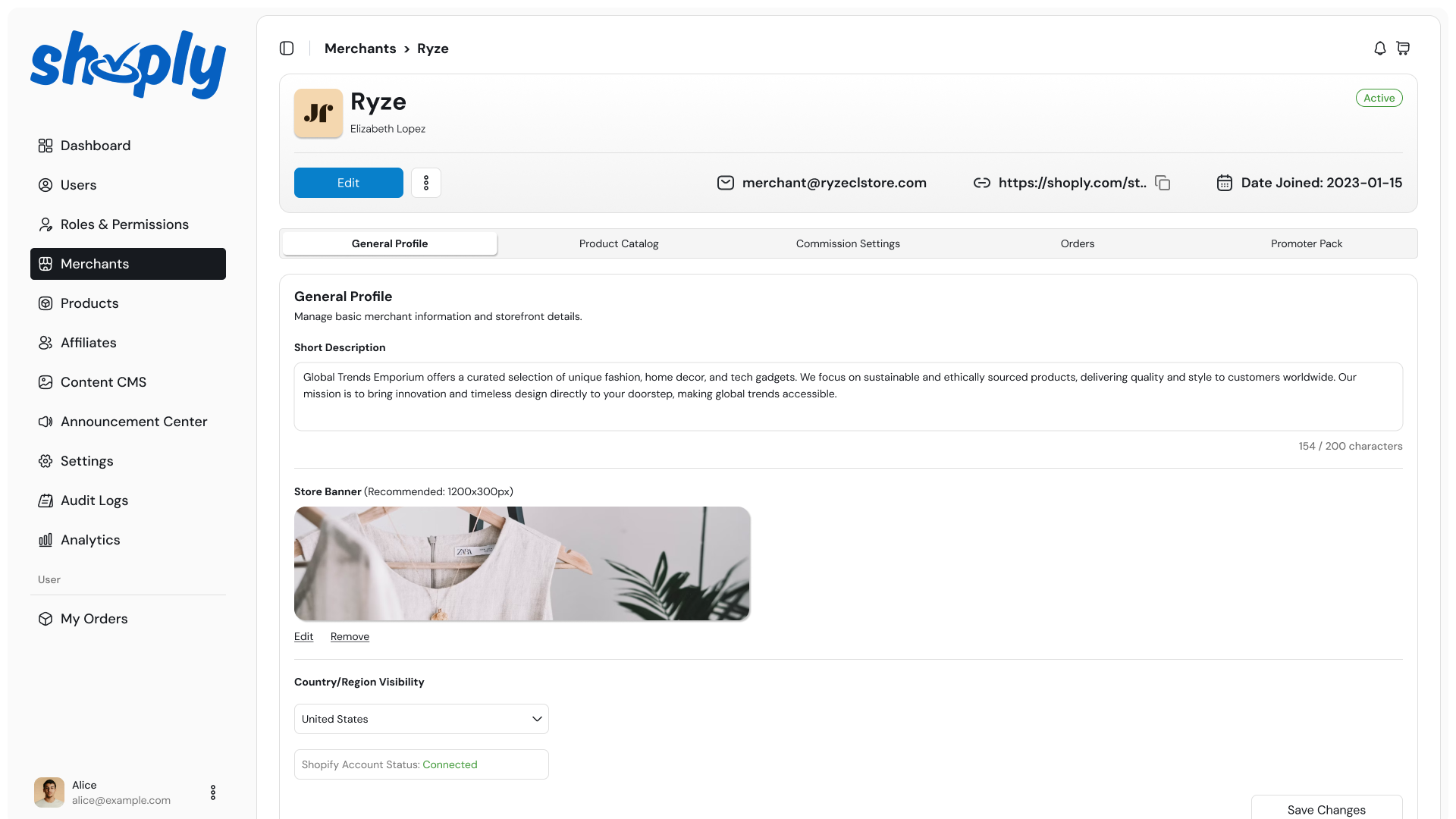
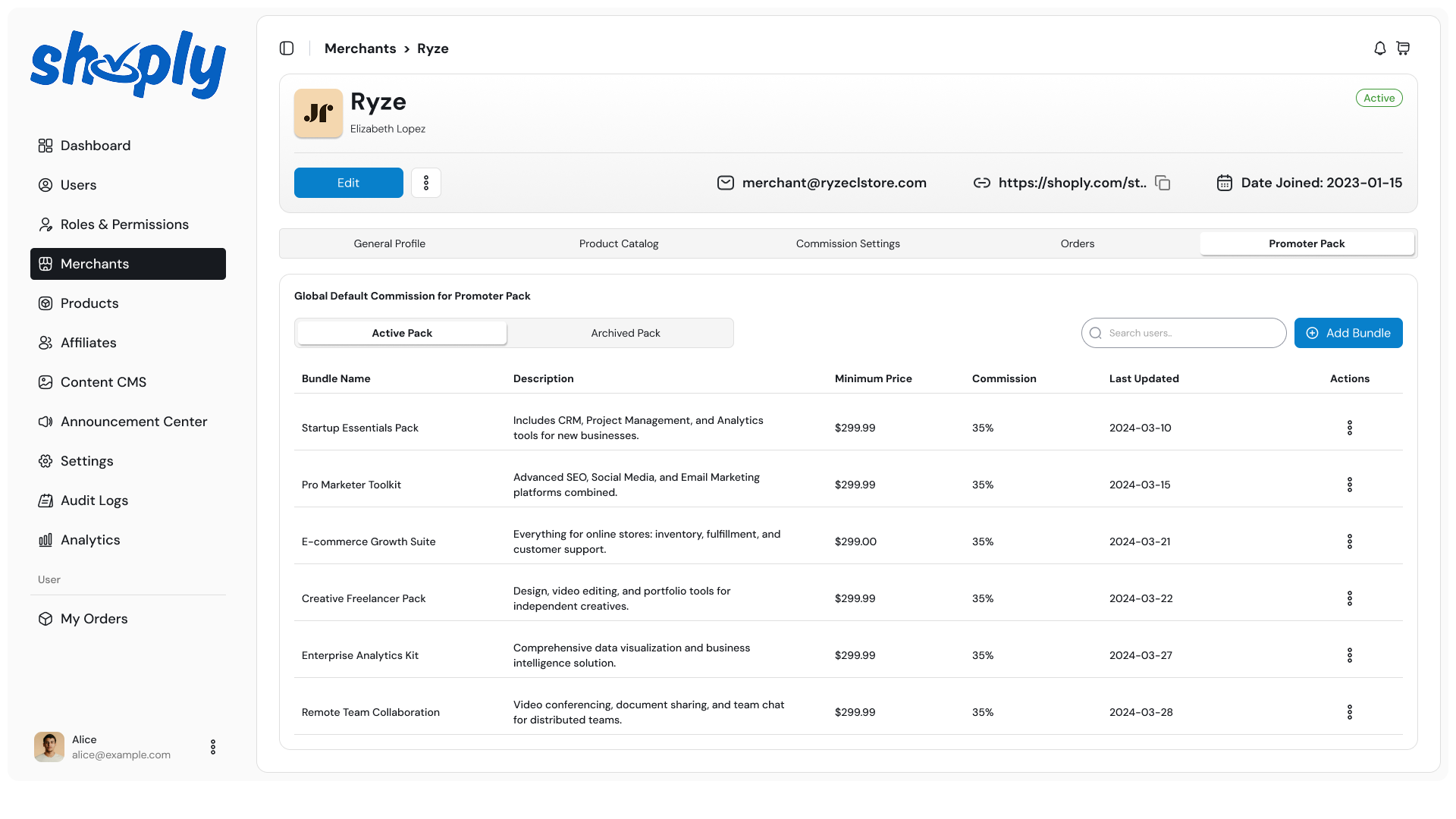
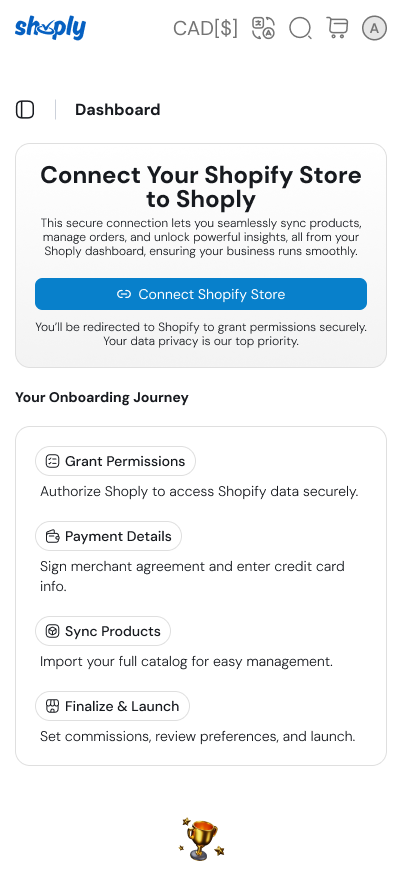
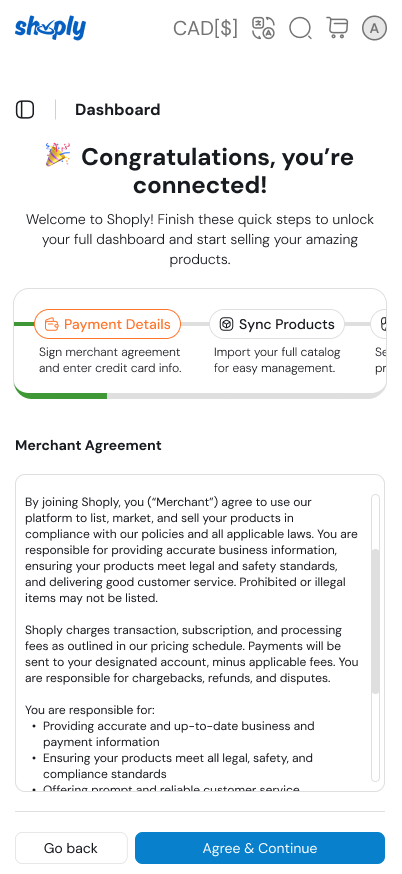
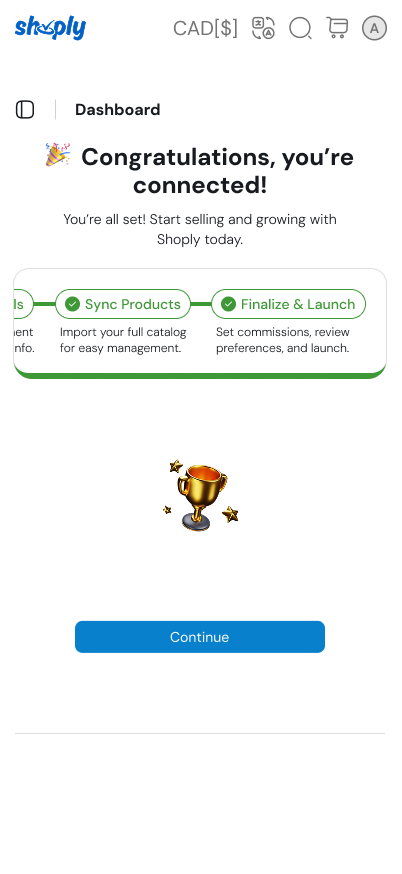
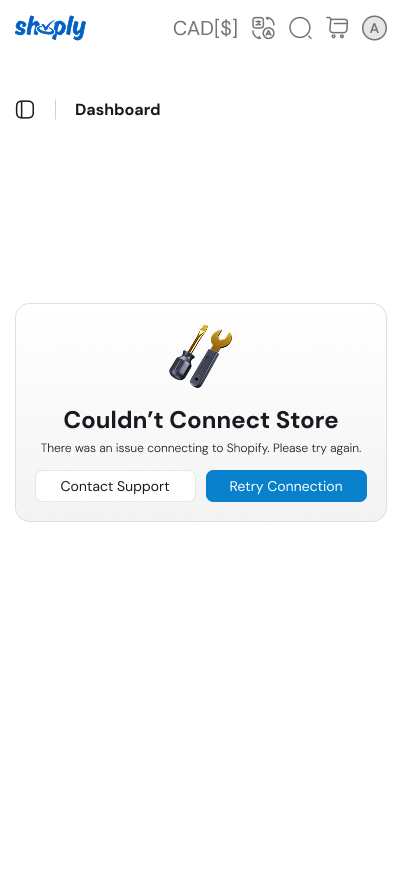
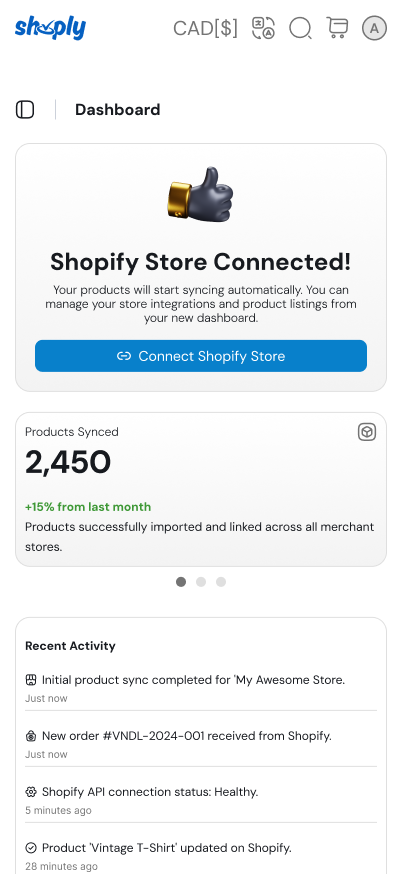
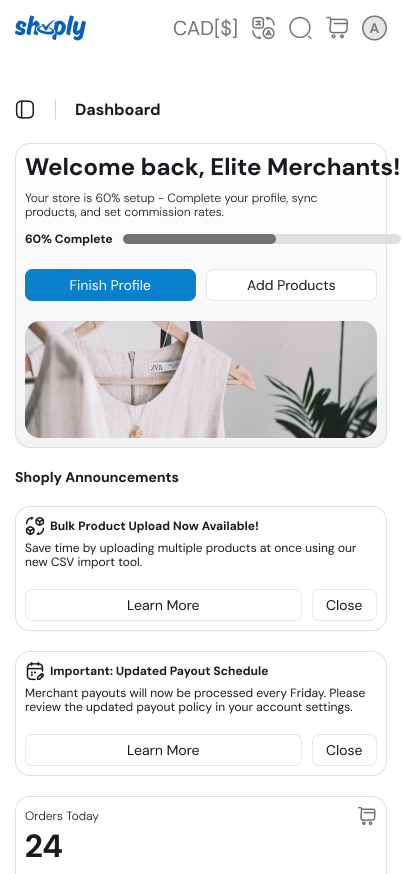
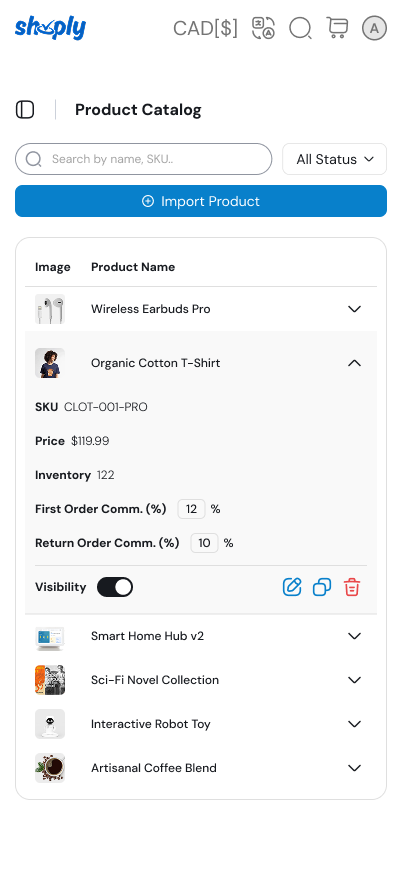
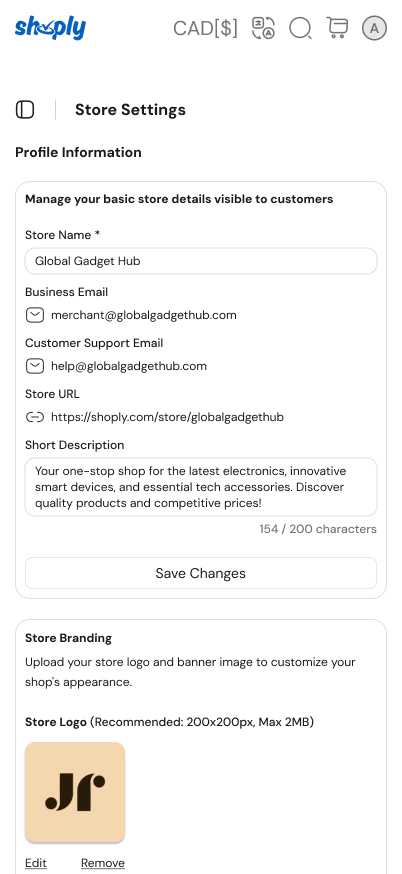
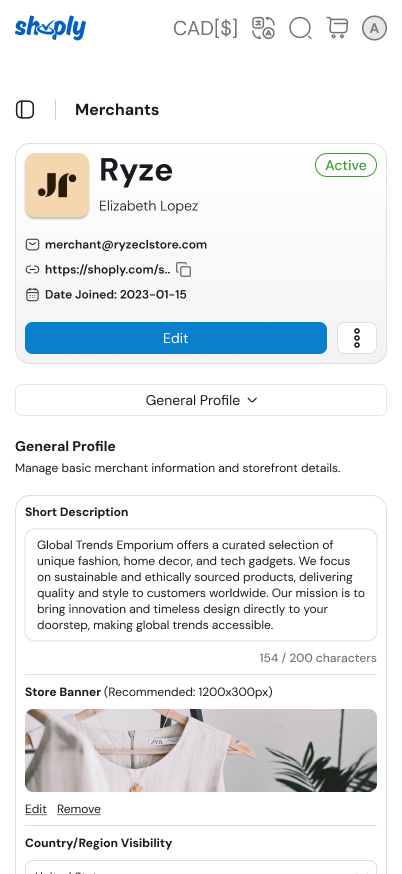
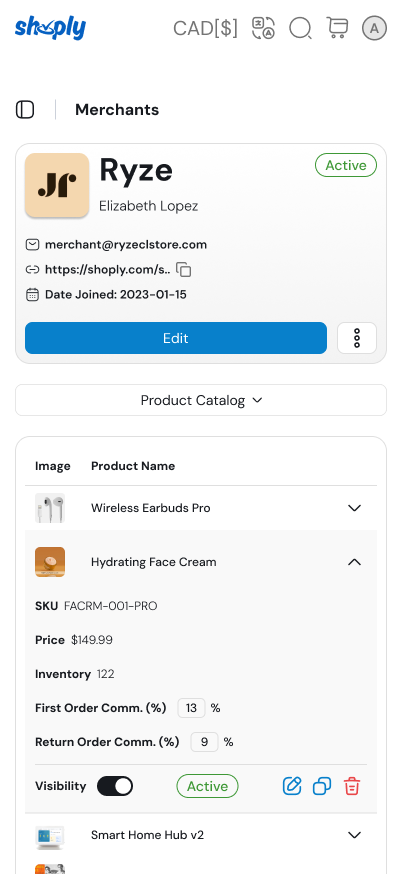
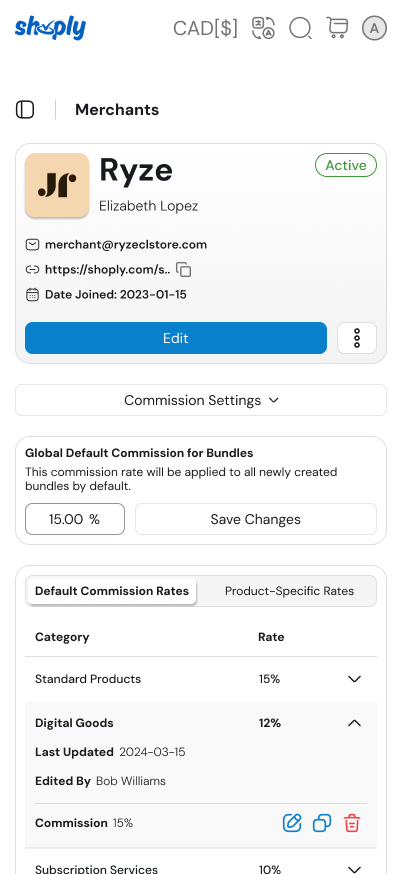
The merchant ecosystem covers the full vendor journey, from the Shopify permissions handshake and product sync milestones to the per-product commission controls, promoter pack bundles, and the unified orders and analytics view.
Admin UI Screens
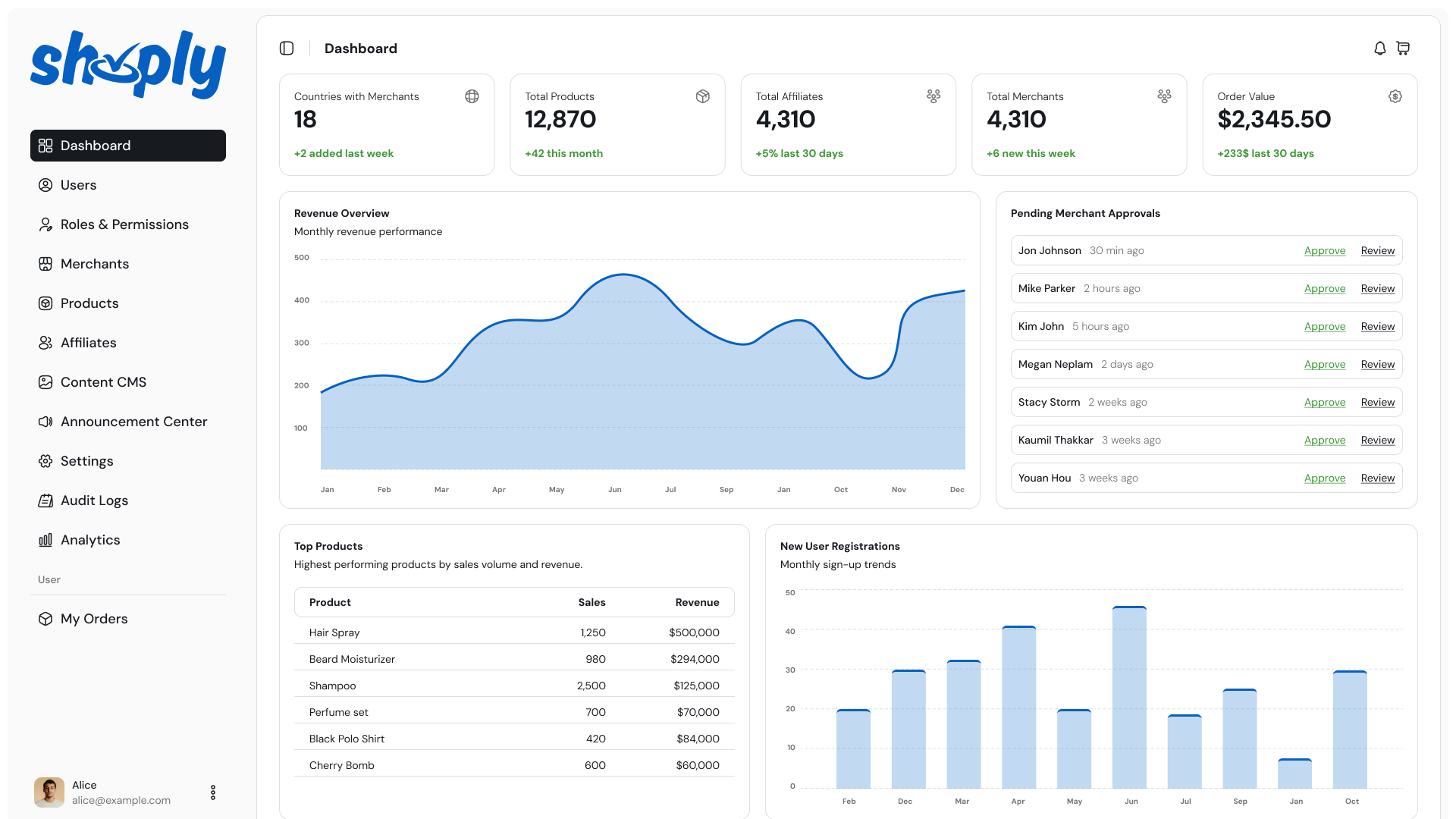
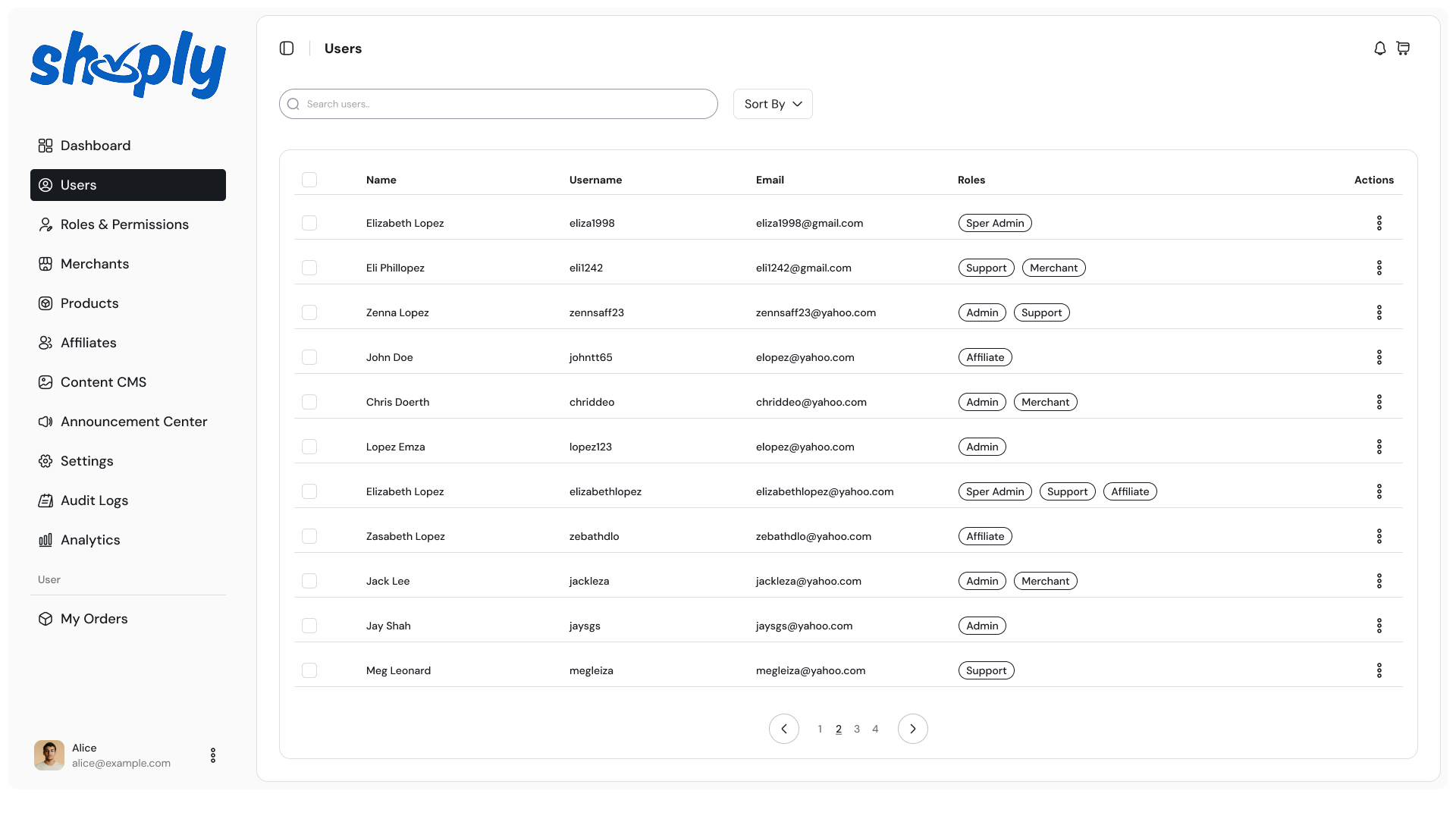
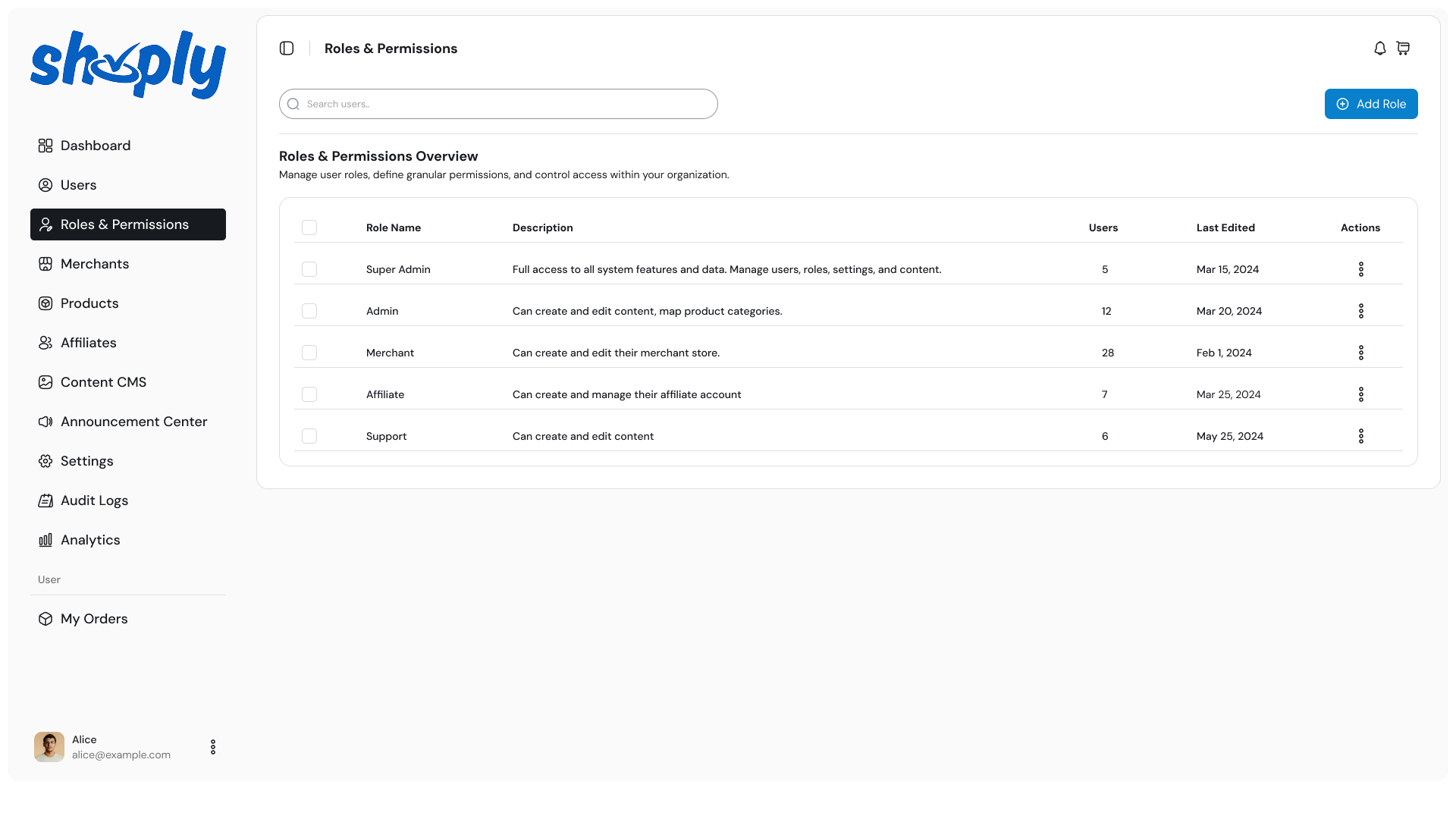
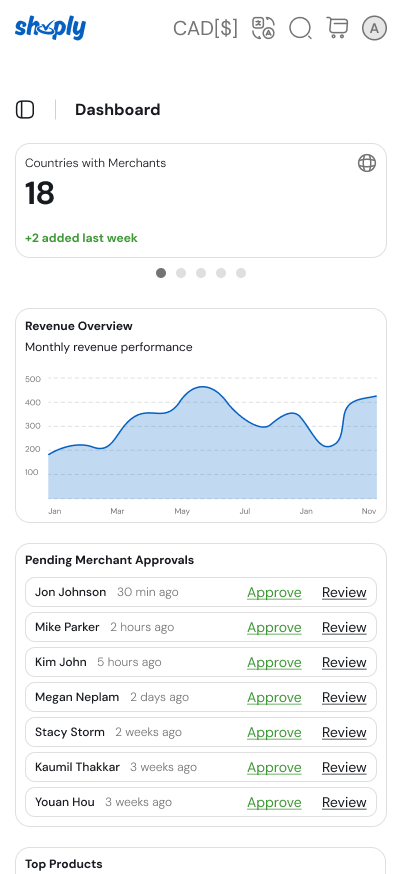
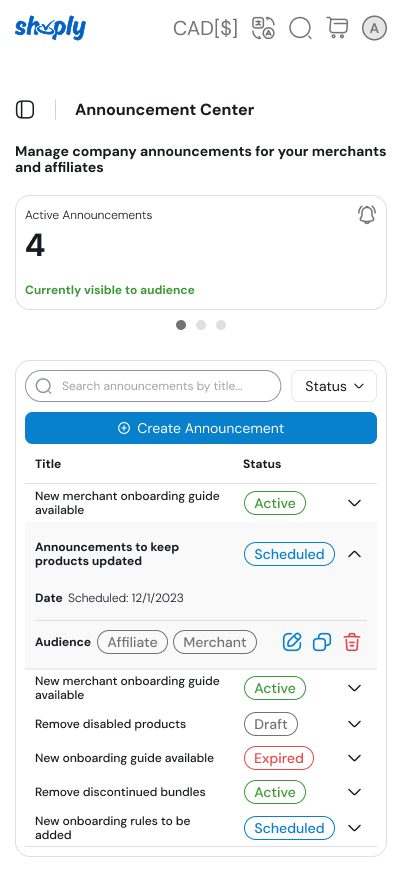
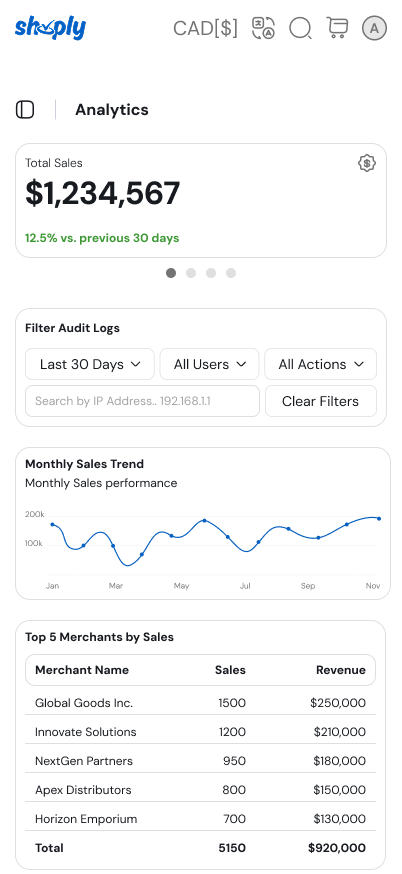
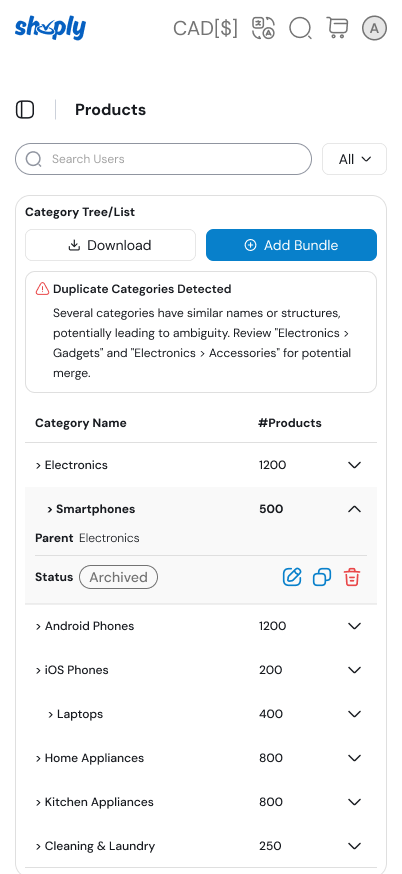
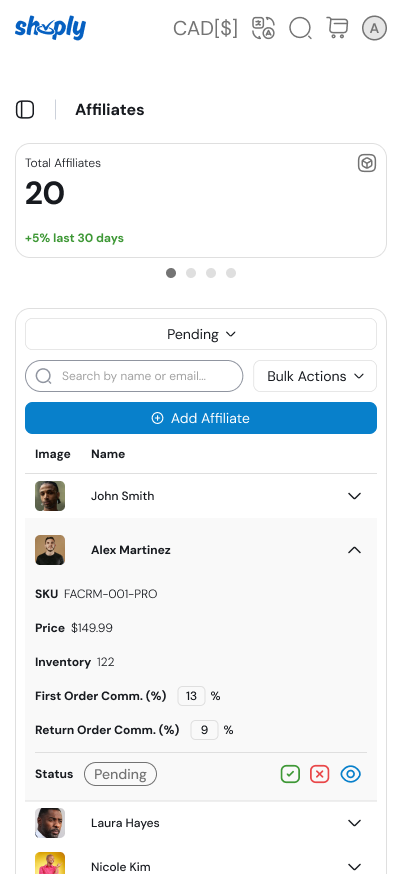
The admin ecosystem covers the entire platform control layer, from role-based user management and merchant approval flows to the drag-and-drop storefront CMS, audit trails, and marketplace-wide analytics.
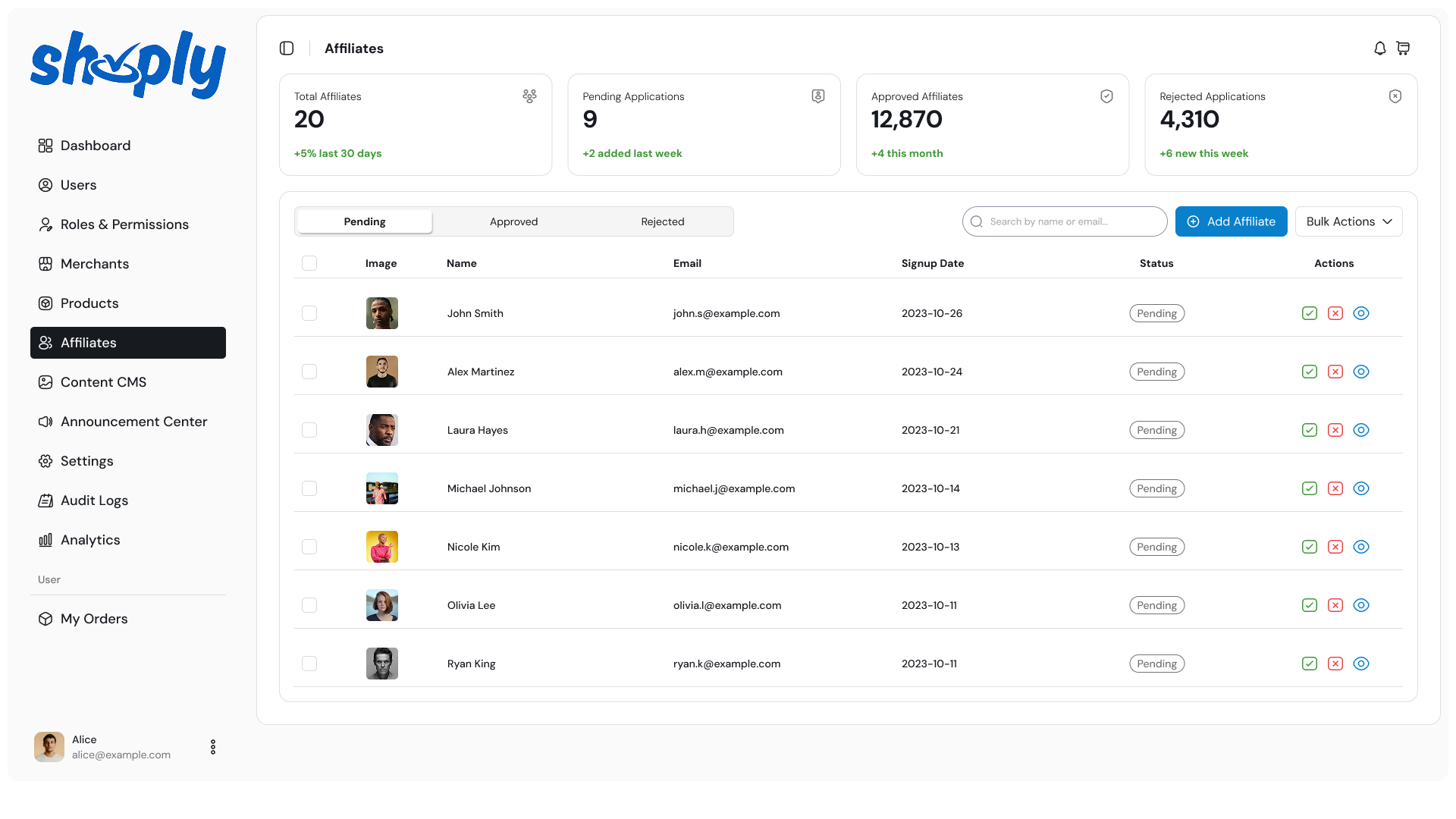
Mobile-First Experience
Every surface across user, merchant, and admin was designed mobile-first, then scaled up.
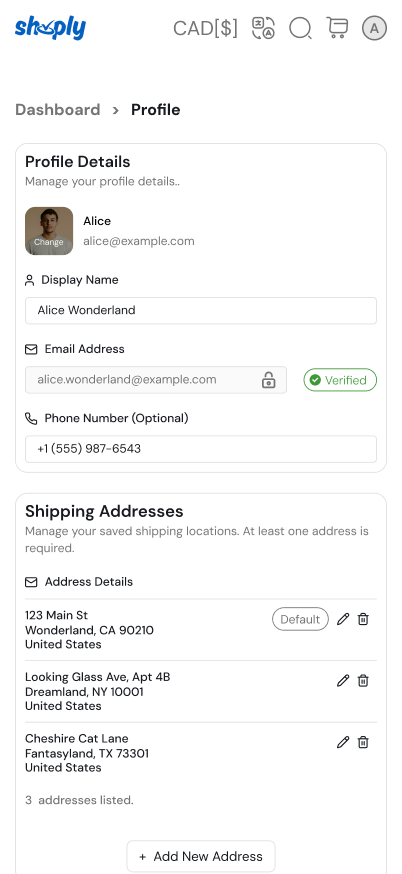
The customer side maps naturally to native mobile patterns. Interest selectors, vertical product feeds, and sticky CTAs all sit within comfortable thumb reach. The complexity was on the merchant and admin side, where dense Shopify product catalogs, multi-column commission tables, audit logs, and analytics dashboards had to remain fully functional on a 380px screen.
Tables were restructured as stacked cards. The most critical data fields surface first. Secondary information sits behind expandable rows. Filter and sort controls collapse into bottom sheets to preserve screen real estate.
Long-form merchant flows like Shopify store connection, commission configuration, and promoter pack setup were broken into single-focus steps. Analytics charts reflow vertically, with horizontal scroll reserved only for time-series data where swiping is the natural gesture.
The result is a custom Shopify marketplace app that maintains its full visual hierarchy, data density, and decision-making power at every breakpoint. No feature was removed or hidden for the smaller screen.
User Mobile Screens

Merchant Mobile Screens
Admin Mobile Screens

%20(1).avif)
Book a free strategy call and let DigiBenders help you achieve your business goals.